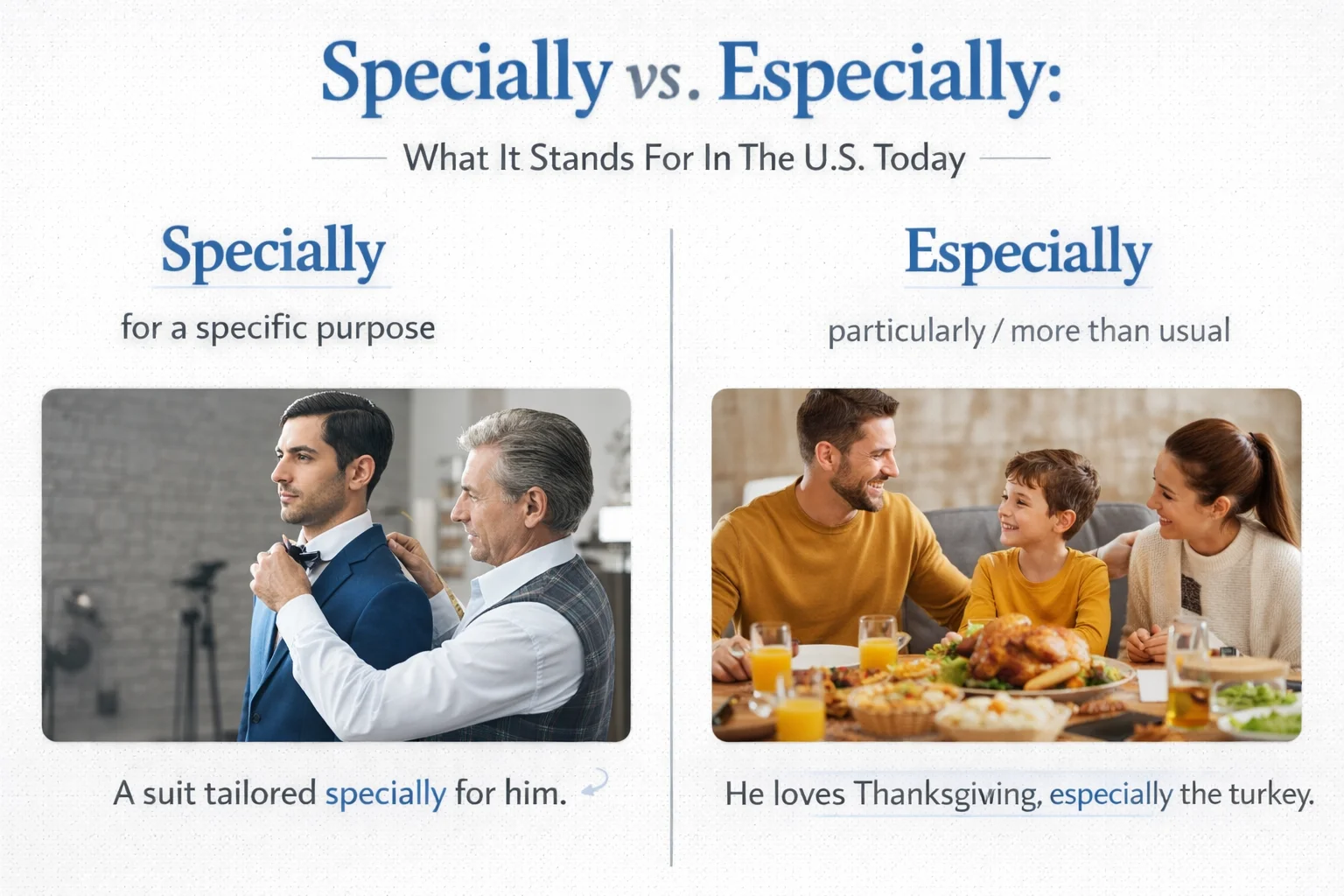
Specially and especially look similar, sound similar, and sometimes overlap. That is why so many people mix them up. But the main difference is straightforward once you stop thinking about spelling and start thinking about meaning. Reputable usage guides agree on the core rule: especially usually means particularly, above all, or more than usual, while specially usually means for a specific purpose or in a special way.
Quick Answer
Use especially when you mean particularly, above all, or more than usual. Use specially when you mean for a specific purpose, specifically, or in a specially tailored way. In modern US English, especially is the broader everyday choice, while specially is narrower and most natural in phrases like specially designed, specially made, specially trained, and specially priced.
A fast test helps. If you can replace the word with particularly, choose especially. If you can replace it with for a specific purpose, choose specially. That rule will get you through most real-world sentences.
The Core Difference
The easiest way to see the difference is to ask what the sentence is doing.
If the sentence is highlighting one thing over others, use especially:
- I love summer fruit, especially peaches.
- Driving is hard, especially at night.
- She was especially helpful today.
In each case, the word adds emphasis. It singles something out as more noticeable, more important, or more true than the rest. That is why dictionaries and grammar guides regularly define especially with ideas like particularly, above all, and to a greater degree.
If the sentence is describing something created, prepared, adapted, or done for a specific purpose, use specially:
- This room was specially designed for recording.
- The staff was specially trained for emergencies.
- They ordered a cake specially for the event.
Here, the point is not emphasis. The point is purpose, customization, or intentional preparation. That is the heart of specially. Britannica, Cambridge, and QuillBot all reflect this pattern, especially with words like designed, made, built, created, and trained.
When To Use Especially
Use especially when you want to highlight what stands out.
That includes at least three common situations.
First, use it when one thing is more important or more notable than others:
- I like all kinds of music, especially jazz.
- The advice was useful, especially for new managers.
Second, use it when something is true to a greater degree:
- She was especially kind today.
- The roads are especially dangerous when it rains.
Third, use it before phrases or clauses that narrow the statement:
- Travel is stressful, especially when flights are delayed.
- The policy matters, especially for small businesses.
These are all normal, natural uses in standard English. Collins, Cambridge, and QuillBot all show especially working this way in emphasis-heavy sentences and before adjective, prepositional, or clause-based structures.
One extra point matters: especially is usually the safer word when you simply mean particularly. That is why sentences like I especially liked the ending sound natural, while I specially liked the ending sounds off in standard US writing. The second version wrongly shifts the sentence toward purpose instead of emphasis.
When To Use Specially
Use specially when the sentence is about purpose, tailoring, or special treatment.
This word most often appears where something was made or done to fit a particular need:
- The equipment was specially built for the lab.
- The menu was specially prepared for children with allergies.
- She was specially invited to the ceremony.
That pattern is not accidental. Major usage guides consistently connect specially with special preparation, special arrangement, or special design. Britannica explicitly notes that it often appears before past-participle-style words like designed, priced, and created.
This is why specially designed sounds right, while especially designed usually sounds unnatural. Designed already signals purpose, so specially fits the meaning. The same is true for specially made, specially trained, specially adapted, and specially priced.
Can Both Ever Be Correct?
Sometimes, yes. This is where many articles oversimplify the issue.
Cambridge notes that especially can also be used in some for a particular purpose contexts, including examples like I bought these (e)specially for you. Britannica also says the meanings and usage of the two words overlap quite a bit. That means not every sentence creates a strict right-or-wrong choice.
But overlap does not mean the words are interchangeable everywhere. In actual usage, the sentence usually leans one way:
- I bought this especially for you sounds natural when the speaker is emphasizing the gesture.
- This brace was specially made for you sounds better when the point is custom production.
- We especially enjoyed the last chapter is right because the point is emphasis.
- The software was specially developed for hospitals is right because the point is design for a specific use.
So the better rule is this: when both words seem possible, choose the one that matches the sentence’s main job. Is it highlighting something, or is it describing purpose? That question almost always leads you to the natural choice.
Common Patterns In Real Sentences
A lot of confusion disappears once you notice the patterns.
Especially commonly appears with:
- nouns or noun phrases: especially children
- adjectives or adverbs: especially difficult, especially well
- prepositional phrases: especially at night
- clauses: especially when traffic is bad
Specially commonly appears with:
- past participles: specially designed, specially made, specially trained
- preparation and arrangement language: specially prepared, specially ordered
- purpose-driven statements: specially for the event, specially for medical use
These patterns line up with how major usage guides explain the words. Once you start looking for them, the choice becomes much easier.
Common Mistakes To Avoid
One common mistake is using specially when you only mean particularly.
Less natural:
- I specially like the weekend brunch.
- She was specially happy to see him.
Better:
- I especially like the weekend brunch.
- She was especially happy to see him.
In both corrected versions, the sentence is about emphasis, not purpose.
Another common mistake is forcing especially into a design or preparation sentence.
Less natural:
- The program was especially created for first-year students.
- The building was especially designed for wheelchair access.
Better:
- The program was specially created for first-year students.
- The building was specially designed for wheelchair access.
Here, the sentence is about specific intention, so specially is the better fit.
A third problem is awkward sentence position. Cambridge specifically warns against fronting especially in sentences like Especially I am … In normal prose, write I especially want to thank Maria, not Especially, I want to thank Maria. If you want a stronger sentence opener, use In particular instead.
Especially vs. Specially In Everyday US English
In everyday US usage, especially is the more flexible and more frequent word because it covers several common ideas at once: particularly, above all, and to a greater degree. Specially is narrower. It usually appears when you are talking about something being made, arranged, or adapted for a particular person, group, or purpose. That is why especially helpful, especially important, and especially when are everyday phrases, while specially designed, specially made, and specially trained sound natural in product copy, healthcare, education, technical writing, and service language.
That distinction matters for natural-sounding American English. If you are unsure, especially is usually the safer default for emphasis. Switch to specially when the sentence clearly points to custom purpose or intentional preparation.
A Quick Memory Trick
Use this shortcut:
- Especially = particularly
- Specially = for a special purpose
If particularly fits, choose especially. If for a specific purpose fits, choose specially. It is simple, accurate, and matches how the best usage guides explain the difference.
Examples You Can Copy
Here are some natural examples in modern US English.
Especially
- I enjoyed the whole trip, especially the last day.
- This guide is especially useful for first-time buyers.
- Summer storms are dangerous, especially when the roads flood.
- I was especially grateful for her honesty.
- The discount matters especially to students on a budget.
Specially
- These gloves were specially made for cold-weather work.
- The clinic has specially trained nurses on staff.
- The software was specially developed for small law firms.
- We ordered the table specially for the new office.
- The chef prepared a specially tailored menu for guests with allergies.
Notice the contrast. Especially highlights. Specially customizes.
FAQ
Can specially and especially ever mean the same thing?
Sometimes. In a few contexts, especially in phrases like especially for you, the meanings can overlap. Cambridge explicitly shows (e)specially for you, and Britannica also notes overlap between the two words. But in most sentences, one option still sounds more natural than the other depending on whether the sentence is about emphasis or purpose.
Is “especially for you” wrong?
No. It can be perfectly natural when the sentence emphasizes the personal gesture or the fact that something is singled out for someone. But if the focus is on custom design or special preparation, specially for you may be the stronger choice. Compare I bought this especially for you with This mouthguard was specially made for you.
Why does “specially designed” sound right but “especially designed” doesn’t?
Because designed already points to purpose. When you say specially designed, you are saying the thing was designed for a specific use. That fits the core meaning of specially. Especially designed usually sounds wrong because especially is an emphasis word, not the normal purpose word in that construction. Britannica and Cambridge both support this pattern, and QuillBot reinforces it with designed, built, and made examples.
Which word is more common in everyday writing?
In practice, especially is the broader everyday word because it works for emphasis, degree, and singling something out. Specially is more limited and usually appears in purpose-driven phrases such as specially made, specially designed, and specially trained. That does not make specially rare or wrong. It just means it has a narrower job.
Can I start a sentence with “Especially” followed by a comma?
Usually, no. In the usage covered here, that often sounds awkward. Cambridge specifically notes that Especially I am … is not the preferred structure. In most cases, move the word later in the sentence: I especially want to thank you. Or replace it with In particular if you want a fronted transition.
The Bottom Line
If you want the shortest correct rule, use this one: choose especially for particularly, and choose specially for for a specific purpose. That rule covers most real sentences. Use especially when you are highlighting something. Use specially when you are describing something designed, prepared, or done for a particular use. And when a sentence seems to allow both, ask which meaning matters more: emphasis or purpose.

1 thought on “Specially vs. Especially: Difference, Meaning, and Usage”
Comments are closed.