
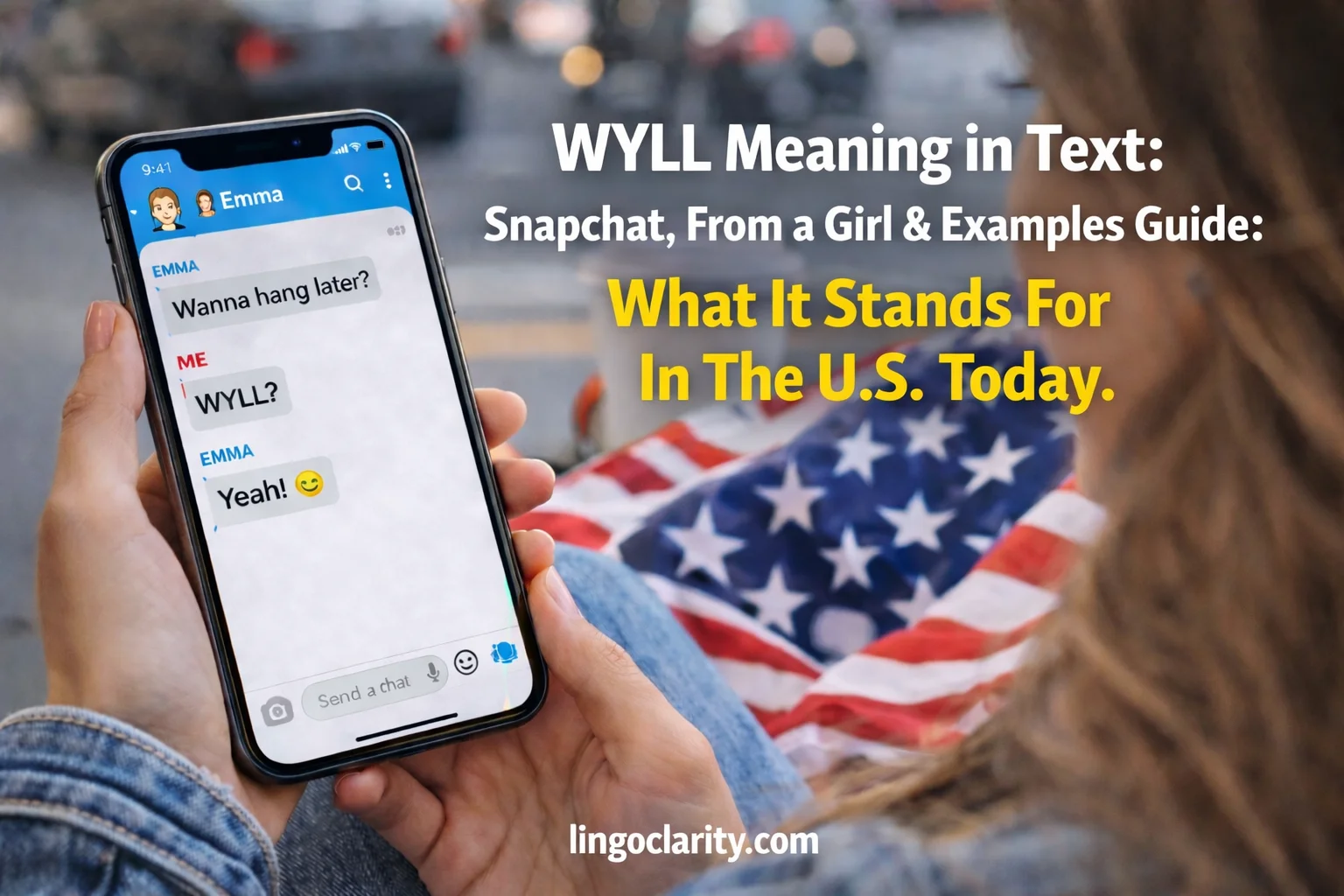
You may see WYLL in a text, Snapchat message, or DM and pause for a second. The letters are short, but the meaning is not obvious if you have never seen them before. In current online slang, WYLL is most widely used to mean “what you look like” or, more naturally, “what do you look like?” It usually appears in casual private chats when one person wants to know another person’s appearance or wants them to send a photo.
That simple meaning can still feel awkward in real life. Sometimes WYLL sounds curious. Sometimes it sounds flirty. Sometimes it sounds shallow or too direct, especially when a stranger asks it too early. That is why understanding the tone matters just as much as understanding the letters. Public explainers also note that context matters and that people do not have to answer or send a picture just because someone asked.
In this guide, you will learn the plain meaning of WYLL, what it means in text, what it means on Snapchat, what it may mean from a girl, how to reply, when to avoid using it, and the common mistakes people make with it. By the end, the term should feel simple, clear, and easy to handle.
Quick Answer
WYLL usually means “what you look like.” In everyday texting, that often works as a short way to ask, “What do you look like?” or “Can I see a picture of you?” It is informal slang used mostly in chats, DMs, and Snapchat conversations.
TL;DR
• WYLL usually means “what you look like.”
• It is common in texts, DMs, and Snapchat.
• It often hints that the other person wants a selfie or photo.
• The tone may be curious, playful, flirty, or too forward.
• You never have to reply with a picture if you do not want to.
Simple Definition
The simplest definition is this: WYLL = what you look like. It is an internet shorthand people use when they want to know someone’s appearance. In many cases, the person is really asking for a selfie, a snap, or a quick description.
This slang is very informal. It belongs in personal chats, not in professional writing, school assignments, or formal emails. Support and slang references consistently describe it as casual texting language used in social messaging rather than standard written English.
What WYLL Means In Text
In a normal text conversation, WYLL usually appears when two people are chatting but have not met in person. The sender wants to put a face to the conversation. In other words, they want to know what the other person looks like, and they may be hoping for a photo in response. Parade and Dictionary.com both describe it as something people often use when messaging someone they have not met face to face yet.
For that reason, WYLL often shows up in early-stage conversations. It can appear in dating chats, casual DMs, online friendships, or random social conversations. Hushed also notes that it is common in casual chats when people are getting to know each other and are curious about appearance.
Still, the exact feel of the message depends on timing. After a long, friendly conversation, “wyll?” may sound natural. As an opening line from a stranger, it can sound abrupt or even rude. Dictionary.com specifically notes that people who use wyll aggressively or clumsily are often seen as superficial or desperate, which explains why the term can leave a bad impression when used too fast.
What WYLL Means On Snapchat
On Snapchat, WYLL keeps the same core meaning: “what you look like.” The reason it feels especially common there is simple. Snapchat is built around photos, selfies, and quick visual replies, so the question naturally fits the app’s style. Dexerto’s Snapchat slang guide defines WYLL there as a way to ask someone what they look like if you do not know them in real life.
On Snapchat, the message may be asking for one of several things:
• a selfie
• a live snap
• a face picture
• a quick look at your outfit or vibe
• proof that the person matches the profile or chat
That does not mean you have to send anything. Public explainers aimed at everyday users and parents both stress that you should not feel forced to share a photo if the request makes you uncomfortable.
What WYLL Means From A Girl
If a girl sends WYLL, the basic meaning usually does not change. She is still asking what you look like. The letters do not carry a special hidden female-only meaning. Sources that explain the term across platforms say the same core definition applies regardless of who sends it.
What can change is the tone. She may be:
• curious about who she is talking to
• trying to match a face to the chat
• lightly flirting
• deciding whether she wants to keep talking
• simply making casual conversation
So, do not overread the message. WYLL from a girl does not automatically mean strong romantic interest. Sometimes it is flirty, but sometimes it is just curiosity. The safest rule is to read the full conversation, not just the acronym. Hushed explicitly notes that tone and context matter when someone texts WYLL.
Real-Life Example
Imagine you have been talking to someone on Snapchat for two days. You have joked around, swapped music, and sent a few voice notes, but neither of you has sent a clear face picture yet. Then they message:
“You seem cool lol, wyll?”
In that moment, they are usually asking one of two things:
either “What do you look like?” or “Can you send me a picture?” That fits the common public definition of the slang on texting and Snapchat platforms.
Now compare that with this message:
“Hey, we just started talking. No pressure, but wyll?”
That version sounds softer because it gives you room to say no. The meaning stays the same, but the tone becomes more respectful. In real conversations, that tone difference matters a lot because many people dislike the term when it feels sudden, demanding, or appearance-focused. Dictionary.com even notes that users who throw it out too aggressively are often mocked online for sounding shallow.
How To Respond To WYLL
There is no single correct response. The best reply depends on your comfort level, your relationship with the other person, and the vibe of the chat.
If you are comfortable answering, you could reply with:
• “Here’s a selfie.”
• “I’ll send a snap.”
• “Brown hair, glasses, and usually a hoodie.”
• “You first 😄”
• “I’ll show you later.”
If you are not comfortable, you can still reply clearly and politely:
• “I’m not sending pics right now.”
• “Let’s talk more first.”
• “I’d rather stay private for now.”
• “Not comfortable with that yet.”
• “Maybe later.”
This matters because you are never required to send a photo. Findmykids and Hushed both note that a person can choose not to respond or not to share pictures if they do not want to.
Sentence Usage
Here are natural examples of WYLL in everyday chat:
• “We’ve been talking all night. WYLL?”
• “Before we meet, wyll?”
• “You sound funny on voice notes, but wyll?”
• “He asked me wyll five minutes after adding me on Snap.”
• “She said wyll, and I just sent a mirror selfie.”
• “I told him I do not send pictures when someone asks wyll too early.”
In these examples, WYLL acts like a short question. It is best understood as message shorthand, not as standard formal English. That matches how slang references describe its use in texting and social media.
Synonyms And Close Alternatives
There is no perfect one-word synonym because WYLL has a very specific texting feel. Still, these are the closest alternatives:
• What do you look like?
• Can I see you?
• Send a pic?
• Selfie?
• What’s your vibe?
• Do you have a picture?
Some of these sound softer than WYLL, while others sound even more direct. For example, “What do you look like?” is clearer and more natural in full English. “Send a pic?” can sound blunter. “Selfie?” is short and casual but may still feel pushy depending on the moment.
Opposites Or Opposite Responses
There is no true dictionary-style antonym for WYLL. It is a question, not a standard noun or adjective. However, the closest opposite idea is a privacy-based response, such as:
• “I’d rather stay private.”
• “I do not share pictures online.”
• “Let’s keep chatting first.”
• “I’m not comfortable sending photos.”
These are useful because they express the opposite intention: instead of showing appearance, they set a boundary. That fits the broader guidance from public explainers that users do not have to send a picture just because someone asks.
When WYLL Works Best And When It Does Not
| Context | Best Choice | Why |
|---|---|---|
| Friendly chat after some back-and-forth | WYLL can work | It feels more natural after some trust |
| Snapchat between mutuals | Often okay | The platform is photo-based |
| First message to a stranger | Better to avoid | It may sound shallow or too forward |
| Formal, academic, or work writing | Do not use WYLL | It is informal slang |
This pattern matches public descriptions of the term: it is mainly casual, commonly seen on Snapchat and texting, and often criticized when it is used too quickly or too aggressively.
Common Mistakes
One common mistake is thinking WYLL always means flirting. It can be flirty, but that is not automatic. Sometimes it is simple curiosity. Sometimes it is a clumsy request for a selfie. The surrounding conversation matters more than the acronym alone.
Another mistake is assuming WYLL from a girl means something totally different from WYLL from a guy. In most cases, the meaning stays the same: the person wants to know what you look like. What changes is the tone, not the basic definition.
A third mistake is using WYLL in the wrong setting. It is not appropriate for school papers, workplace messages, or professional communication. It is slang meant for casual digital chats.
Finally, some people treat WYLL as harmless in every situation. That is not always true. When sent too early, it can come across as pushy, appearance-focused, or rude. Dictionary.com’s usage notes reflect that reputation directly.
Mini Quiz
1. What does WYLL usually mean?
A. What year looks long
B. What you look like
C. Will you leave later
2. Is WYLL formal or informal?
A. Formal
B. Informal
3. Where is WYLL commonly used?
A. Job applications
B. Snapchat and texts
C. Academic essays
4. Do you have to answer WYLL with a photo?
A. Yes
B. No
Answer Key:
- B
- B
- B
- B
FAQs
What does WYLL mean in text?
In text, WYLL usually means “what you look like.” It is a casual shorthand people use when they want to know your appearance or want you to send a picture.
What does WYLL mean on Snapchat?
On Snapchat, WYLL still means “what you look like.” It often appears when someone wants a selfie, face snap, or quick photo from a person they do not know well in real life.
What does WYLL mean from a girl?
From a girl, WYLL usually means the same thing: she wants to know what you look like. The message may sound curious, friendly, or flirty depending on the rest of the conversation.
How do you respond to WYLL?
You can send a selfie, describe yourself, ask them to go first, or politely decline. You do not have to send a photo if you are not comfortable.
Is WYLL flirting?
Sometimes, yes. But not always. It can be flirtatious in romantic chats, yet in other cases it is simply curiosity about who someone is talking to.
Is WYLL rude?
Not automatically. Still, many people find it rude, shallow, or too direct when it comes too early in a conversation or sounds demanding.
Should you use WYLL in formal writing?
No. WYLL is informal texting slang, so it does not belong in professional emails, academic work, or formal communication.
Conclusion
So, what does WYLL mean in text? In most cases, it simply means “what you look like.” That same meaning usually carries over to Snapchat and private DMs. If a girl says it, the basic definition does not suddenly change. What changes is the tone and the situation.
The best way to handle WYLL is to keep two things in mind: first, read the context; second, protect your comfort level. If you want to reply, you can. If you do not, you can set a boundary and move on. That is the clearest, most practical way to understand and use this slang today.
