
These two verbs are easy to mix up. They look similar, sound alike for many American speakers, and share related roots. In modern US English, though, they usually do different jobs.
One means make certain or guarantee. The other is mainly used for insurance coverage and financial protection against loss.
For most everyday writing, keeping that distinction clear makes your wording sound more natural and precise.
Quick Answer
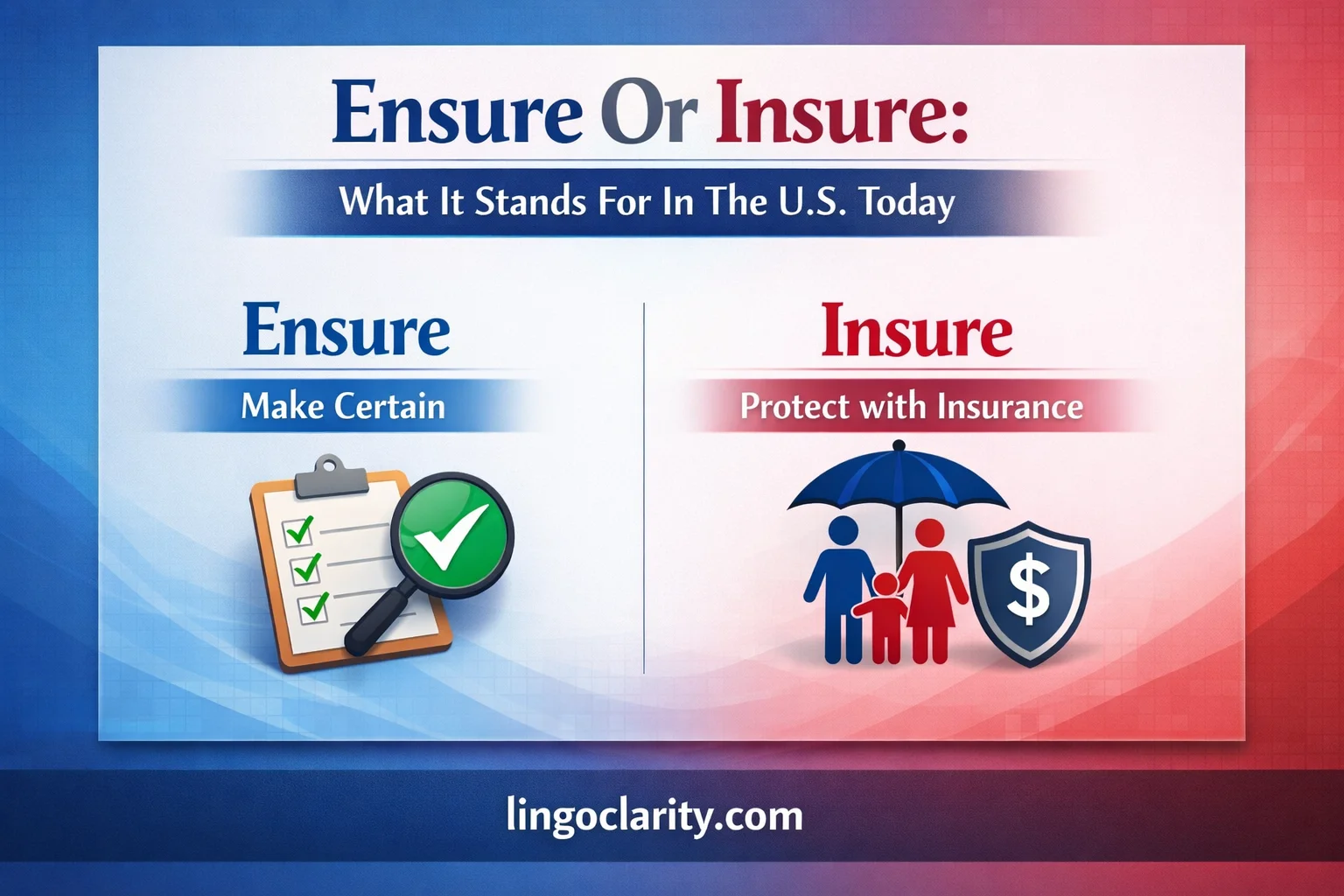
Use ensure when you mean make certain, guarantee, or help bring about a result.
Use insure when you mean provide or obtain insurance against loss, damage, injury, or risk.
If the sentence is not about an insurance policy or coverage, the first verb is usually the safer choice.
Why People Confuse These Verbs
The confusion is understandable.
First, many Americans pronounce them the same way. Second, both words suggest protection or certainty in a broad sense. Third, older usage sometimes overlapped, which makes the distinction look less strict than it is in current US writing.
Today, most readers expect a simple pattern:
- ensure = make sure
- insure = cover with insurance
That is the clearest rule to follow.
Key Differences At A Glance
The easiest way to separate them is by meaning:
- Use ensure for outcomes, conditions, and results.
- Use insure for policies, coverage, and financial risk.
Examples:
- You ensure accuracy.
- You ensure compliance.
- You ensure that everyone gets the message.
- You insure a car.
- You insure a home.
- You insure property against damage.
Meaning And Usage Difference
What Ensure Means
Ensure means to make something certain or to make sure something happens.
Examples:
- Please ensure that the doors are locked before you leave.
- These steps will ensure a smoother launch.
- Clear instructions help ensure fairness.
This word usually points to an outcome, process, rule, or condition.
What Insure Means
Insure means to provide insurance for someone or something, or to protect financially against loss or damage.
Examples:
- They decided to insure the house against flood damage.
- You should insure the jewelry before traveling.
- The company insured its equipment against theft.
This word points to financial coverage, not general certainty.
Tone, Context, And Formality
This is mostly a question of context, not formality.
The broader verb is common in schools, workplaces, websites, instructions, public notices, and formal documents.
The insurance verb sounds most natural in legal, financial, business, and policy-related writing. Outside those settings, it can feel awkward to many US readers.
So the real issue is not whether the sentence sounds formal. It is whether the meaning is about results or coverage.
Which One Should You Use?
A quick rule works well:
- Choose ensure for outcomes, conditions, and processes.
- Choose insure for policies and financial protection.
You can also use a substitution test:
- If make sure fits, use ensure.
- If cover with insurance fits, use insure.
Examples:
- We need to ensure that every student receives the update.
- You should insure the rental car before the trip.
That simple check solves most cases.
When The Wrong Choice Sounds Off
Some mistakes stand out immediately.
Wrong: Please insure that the file is saved correctly.
Better: Please ensure that the file is saved correctly.
Wrong: The company ensured the building for fire damage.
Better: The company insured the building against fire damage.
The intended meaning may still be understandable, but polished writing should also sound natural.
Common Mistakes And Quick Fixes
A frequent mistake is using the insurance verb as a general substitute for the broader one.
Wrong: Double-check the list to insure nothing is missing.
Better: Double-check the list to ensure nothing is missing.
Another mistake is using the broader verb when the sentence clearly refers to coverage.
Wrong: Did you ensure your rental car?
Better: Did you insure your rental car?
A fast fix is to ask this:
Are you talking about a result, or are you talking about insurance coverage?
That usually gives you the answer right away.
Everyday Examples
- The checklist helps ensure accuracy.
- Extra staff will ensure faster service.
- Please ensure that everyone signs in.
- They insure classic cars.
- We need to insure the equipment before shipping it.
- The policy insures the building against storm damage.
Word Details
Verb Forms
Ensure is a verb meaning to make certain, to guarantee, or to help bring about a result.
Example: These steps ensure a fair review process.
Insure is a verb meaning to provide insurance for or to protect financially against loss or damage.
Example: They insured the shop against fire.
Noun Forms
Neither verb is commonly used as a noun in standard modern US English.
Useful Synonyms
For the broader verb, useful alternatives include:
- make sure
- guarantee
- secure
- confirm
For the insurance verb, useful alternatives include:
- cover
- protect with insurance
- underwrite
These are not interchangeable in every sentence, but they help make the difference clearer.
Word History And Modern Preference
Historically, the two verbs have overlapped more than many writers realize. In current US usage, however, the distinction is usually straightforward: one is the standard choice for making something certain, while the other is generally reserved for insurance-related meanings.
That is the clearest rule for modern American writing.
Common Phrases With Each Word
Phrases With Ensure
- ensure that
- ensure compliance
- ensure safety
- ensure accuracy
Phrases With Insure
- insure against loss
- insure for a stated amount
- insure a vehicle
- insure a property
FAQs
Is insure ever used to mean make sure?
Yes, older usage sometimes uses it more broadly. In modern US writing, though, ensure is usually the better choice when you mean make certain.
Which verb is more common in general writing?
In general US writing, ensure is usually the more natural choice unless the sentence is specifically about insurance coverage.
Do they sound different?
For many American English speakers, they sound the same or nearly the same. That is one reason the confusion is so common.
Which one should I use in business writing?
Use ensure for results, compliance, safety, accuracy, and performance. Use insure only when the subject is insurance, liability coverage, or financial protection.
What is the easiest way to remember the difference?
Think of it this way:
- ensure = make sure
- insure = insurance
That memory trick works in most situations.
Conclusion
The modern US rule is simple:
Use ensure for making something certain.
Use insure for insurance coverage.
That distinction keeps your writing clear, natural, and professional. When you hesitate, rewrite the sentence in plain English. If you mean make sure, choose the broader verb. If you mean protect with insurance, choose the insurance term.

1 thought on “Ensure Or Insure: Which Word Should You Use In US English?”
Comments are closed.