
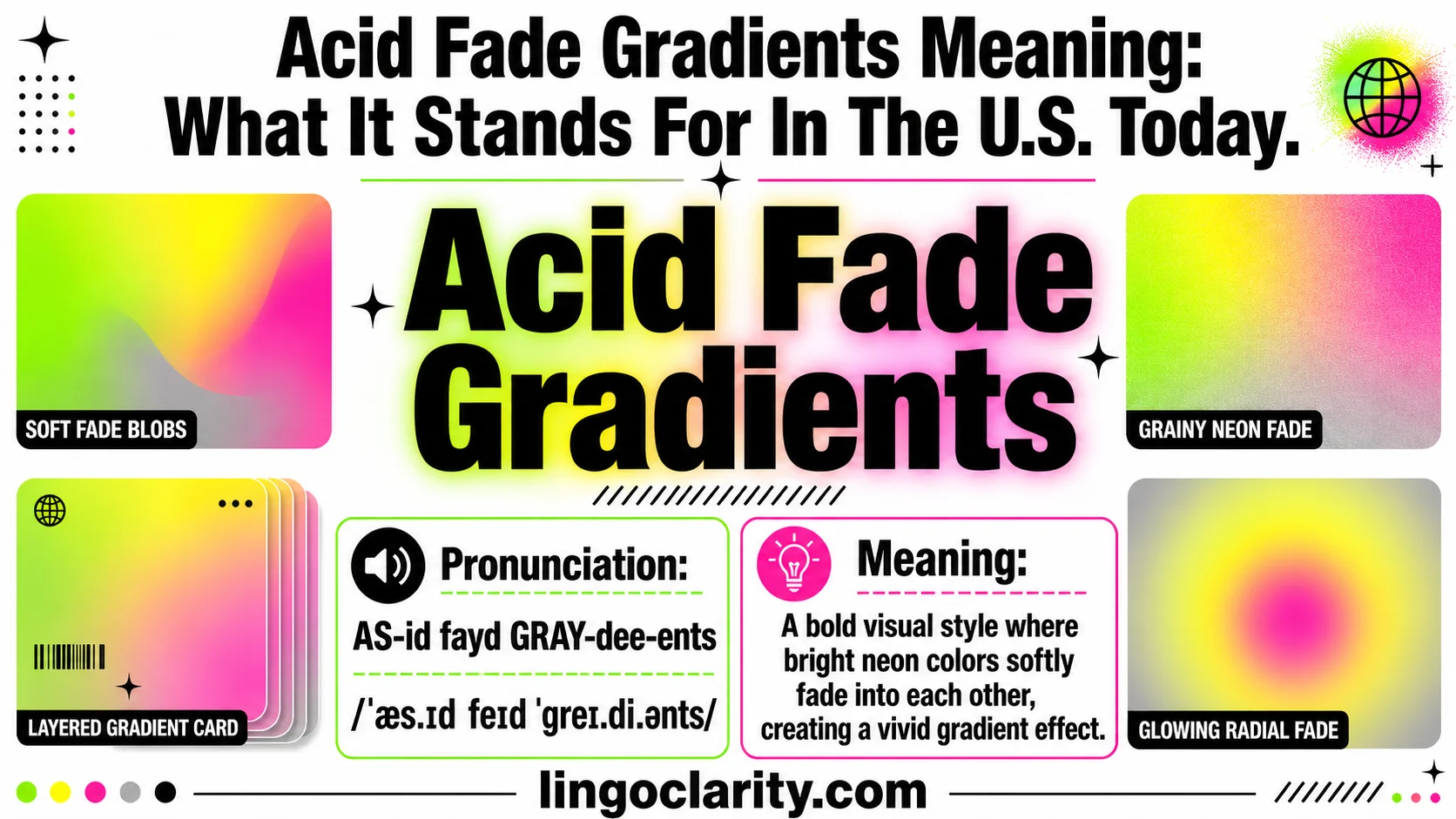
Acid fade gradients are vivid, high-energy color blends that fade smoothly from one shade into another. In plain English, the phrase means a bold neon-like gradient with an electric, psychedelic, or synthetic look.
The word “acid” does not mean a real chemical. In design and style writing, it usually points to an intense visual mood: toxic green, neon yellow, hot pink, ultraviolet purple, chrome gray, glowing blur, grain, or rave-inspired color. “Fade gradient” refers to the smooth transition between those colors.
A normal gradient might fade from sky blue to white. An acid fade gradient might shift from neon green to yellow, then into pink, purple, gray, or metallic silver. The difference is not only the blend. It is the attitude.
What Acid Fade Gradients Mean
Acid fade gradients are strong color transitions that look bright, synthetic, and visually loud. They are often used when a design needs energy, movement, edge, or a futuristic mood.
You may see the phrase in:
- Poster design
- Digital art captions
- Music flyers
- Album covers
- Game skin guides
- Streetwear product descriptions
- Phone case designs
- Website backgrounds
- Social media graphics
- Y2K or rave-inspired visuals
The phrase is most useful when the gradient feels more intense than a soft pastel blend. A beige-to-cream background is a gradient, but it is not usually an acid fade gradient. A neon green-to-yellow-to-hot-pink background with grain and glow probably is.
Plain-English Definition
Acid fade gradients are bright, saturated color blends that fade from one color to another in a bold, neon, psychedelic, or high-contrast style.
A shorter definition:
Acid fade gradients are vivid neon-style gradients with a sharp, electric look.
The phrase works best as a visual description. It is not a strict scientific term, and it is not a standard grammar term. It is a creative phrase used to describe a specific color effect.
How The Words Work Together
Each part of the phrase adds meaning.
“Acid” suggests a vivid, synthetic, trippy, or high-saturation color mood. It often brings to mind neon signs, rave flyers, psychedelic posters, glitch art, liquid chrome, or Y2K graphics.
“Fade” means the color changes gradually instead of switching sharply.
“Gradient” means the actual blended transition between two or more colors.
Together, the phrase describes a smooth color fade with an aggressive, electric palette.
Common Acid Fade Gradient Colors
Acid fade gradients often use colors that feel artificial, glowing, or high-impact. Common choices include:
- Neon green
- Toxic yellow
- Hot pink
- Magenta
- Purple
- Lime
- Cyan
- Silver gray
- Chrome
- Black accents
- Highlighter orange
A typical acid fade palette might look like neon green fading into yellow, then pink, then gray. Another version might use purple, cyan, and metallic silver for a colder digital look.
The exact colors can change, but the effect should feel vivid rather than soft.
Examples Of Acid Fade Gradients
Here are clear examples of how the phrase can be used:
“The poster uses acid fade gradients behind distorted chrome text.”
“The game skin has a yellow-green acid fade gradient with a metallic finish.”
“The hoodie features an acid fade gradient across the sleeves.”
“The album cover mixes grainy acid fade gradients with warped typography.”
“The landing page background feels too intense because the acid fade gradient competes with the headline.”
A stronger design brief might say:
“Create a high-energy event poster using acid fade gradients, distorted type, and a neon green-to-pink palette. Keep the headline readable against the background.”
That sentence gives the designer more useful direction than simply saying “make it colorful.”
Acid Fade Gradients In Design
In graphic design, acid fade gradients are often used to create instant visual impact. They can make a flat layout feel more energetic, rebellious, futuristic, or experimental.
They work especially well for:
- Electronic music posters
- Festival graphics
- Streetwear drops
- Gaming visuals
- Futuristic product mockups
- Experimental web design
- Digital stickers
- Motion graphics
- Editorial art
- Youth-focused branding
However, they are easy to overuse. Because the colors are intense, they can make text harder to read. If you use an acid fade gradient behind words, you usually need strong contrast, a dark overlay, a clean text box, or large bold type.
Acid Fade Gradients In Gaming
In gaming, “Acid Fade” may refer to a specific skin or finish rather than a general design style. For example, Counter-Strike players discuss SSG 08 Acid Fade patterns, fade percentages, and color ratios. These skins often involve yellow, green, gray, chrome-like surfaces, and gradient transitions.
So the meaning depends on context.
In a design article, “acid fade gradients” usually means a neon-style gradient effect. In a game skin guide, “Acid Fade” may refer to a particular cosmetic finish, pattern, or collectible variation.
Acid Fade Gradient Vs. Regular Gradient
A regular gradient is any smooth blend between colors. It can be subtle, elegant, neutral, dark, pastel, or bold.
An acid fade gradient is a specific kind of gradient. It is brighter, sharper, louder, and more synthetic-looking.
For example:
| Visual Effect | Better Term |
|---|---|
| Blue fading into white | Soft Gradient |
| Beige fading into cream | Neutral Gradient |
| Pink fading into lavender | Pastel Gradient |
| Neon green fading into yellow and pink | Acid Fade Gradient |
| One color fading from dark to light | Ombré |
| A game weapon finish with yellow-green chrome fade | Acid Fade Skin Or Pattern |
The key difference is intensity. Acid fade gradients are not just blended. They are visually charged.
Acid Fade Gradient Vs. Ombré
Ombré usually describes a gradual shift from one shade to another, often from light to dark. It is common in hair, nails, fashion, interiors, and beauty writing.
Acid fade gradient is more graphic and high-impact. It usually suggests multiple vivid colors, digital styling, or a neon visual effect.
A pink nail fading into pale blush is ombré. A poster fading from toxic green to yellow to magenta with grain and warped text is an acid fade gradient.
When To Use The Phrase
Use “acid fade gradient” when the visual style is:
- Bright
- Saturated
- Neon-like
- Psychedelic
- Futuristic
- Rave-inspired
- Digital or synthetic
- High contrast
- Smoothly blended
It is a good phrase for captions, product descriptions, creative briefs, design reviews, gaming guides, and style notes.
For example:
“Use an acid fade gradient to give the flyer a louder, more experimental look.”
“The acid fade gradient works for the gaming campaign, but it feels too aggressive for the wellness brand.”
When Not To Use The Phrase
Do not use “acid fade gradient” for every color blend. If the design is soft, natural, formal, muted, or minimal, a simpler term is clearer.
Avoid it for:
- Corporate blue gradients
- Beige or cream backgrounds
- Wedding invitations
- Medical diagrams
- Formal reports
- Basic color lessons
- Minimalist brand systems
- Natural sunset fades, unless heavily stylized
Instead, use terms like “soft gradient,” “neutral gradient,” “pastel fade,” “subtle color transition,” or “muted blend.”
Synonyms And Related Terms
There is no perfect synonym, but these phrases are close:
- Neon gradient
- Vivid gradient
- Psychedelic gradient
- Electric color fade
- High-saturation gradient
- Rave-inspired gradient
- Toxic color gradient
- Hypercolor gradient
- Bright color transition
- Acid color blend
Related terms include:
- Gradient
- Fade
- Ombré
- Gradient map
- Acid graphics
- Neon design
- Psychedelic design
- Y2K design
- Rave flyer design
- Chrome typography
Use the closest term based on context. “Neon gradient” is clearer for general readers. “Acid fade gradient” is more stylish and specific.
Common Mistakes
The first mistake is taking “acid” literally. In this phrase, it describes the look of the colors, not a chemical substance.
The second mistake is using the phrase for a single color. A neon green square may be acid-colored, but it is not a gradient unless it fades into another color.
The third mistake is applying it to soft blends. A pale blue-to-white background is a gradient, but it is not normally an acid fade gradient.
The fourth mistake is ignoring readability. Acid fade gradients can overpower text, buttons, logos, and product details. If the background is loud, the layout needs stronger contrast.
Better:
“The event flyer uses an acid fade gradient behind black distorted type.”
Weaker:
“The plain white business card has acid fade gradients.”
The second sentence does not make sense unless the card actually includes bright blended colors.
FAQS
What does acid fade gradients mean?
Acid fade gradients are bright, saturated color blends that fade smoothly from one shade into another. The phrase usually describes neon, psychedelic, futuristic, or high-energy visual styles.
Does acid mean chemical in acid fade gradients?
No. “Acid” is figurative here. It means vivid, sharp, synthetic, neon-like, or psychedelic. It describes the color mood, not a real substance.
Is acid fade gradients a design term?
Yes, but it is more of a descriptive style phrase than a strict technical term. Designers, artists, gamers, and product writers may use it to describe bold gradient effects.
What is the difference between a fade and a gradient?
A fade is the gradual change from one color, tone, or level to another. A gradient is the blended color range created by that change. In design writing, the words often overlap.
What colors are used in acid fade gradients?
Common colors include neon green, yellow, hot pink, purple, cyan, gray, chrome, and black. The palette should feel bright, artificial, and high-impact.
Where are acid fade gradients used?
They are used in posters, album covers, gaming skins, fashion graphics, website backgrounds, digital art, product mockups, and social media visuals.
Is acid fade the same as ombré?
No. Ombré is usually a softer light-to-dark or shade-to-shade transition. Acid fade gradients are louder, brighter, and more graphic.
Conclusion
Acid fade gradients are vivid neon-style color transitions with a bold, electric look. The phrase is most useful in design, gaming, fashion, and digital art when a smooth color blend feels sharp, synthetic, psychedelic, or high-energy.
Use it when the gradient is loud enough to deserve the word “acid.” For softer or more formal visuals, choose a clearer phrase such as “soft gradient,” “muted gradient,” or “subtle color fade.”
