
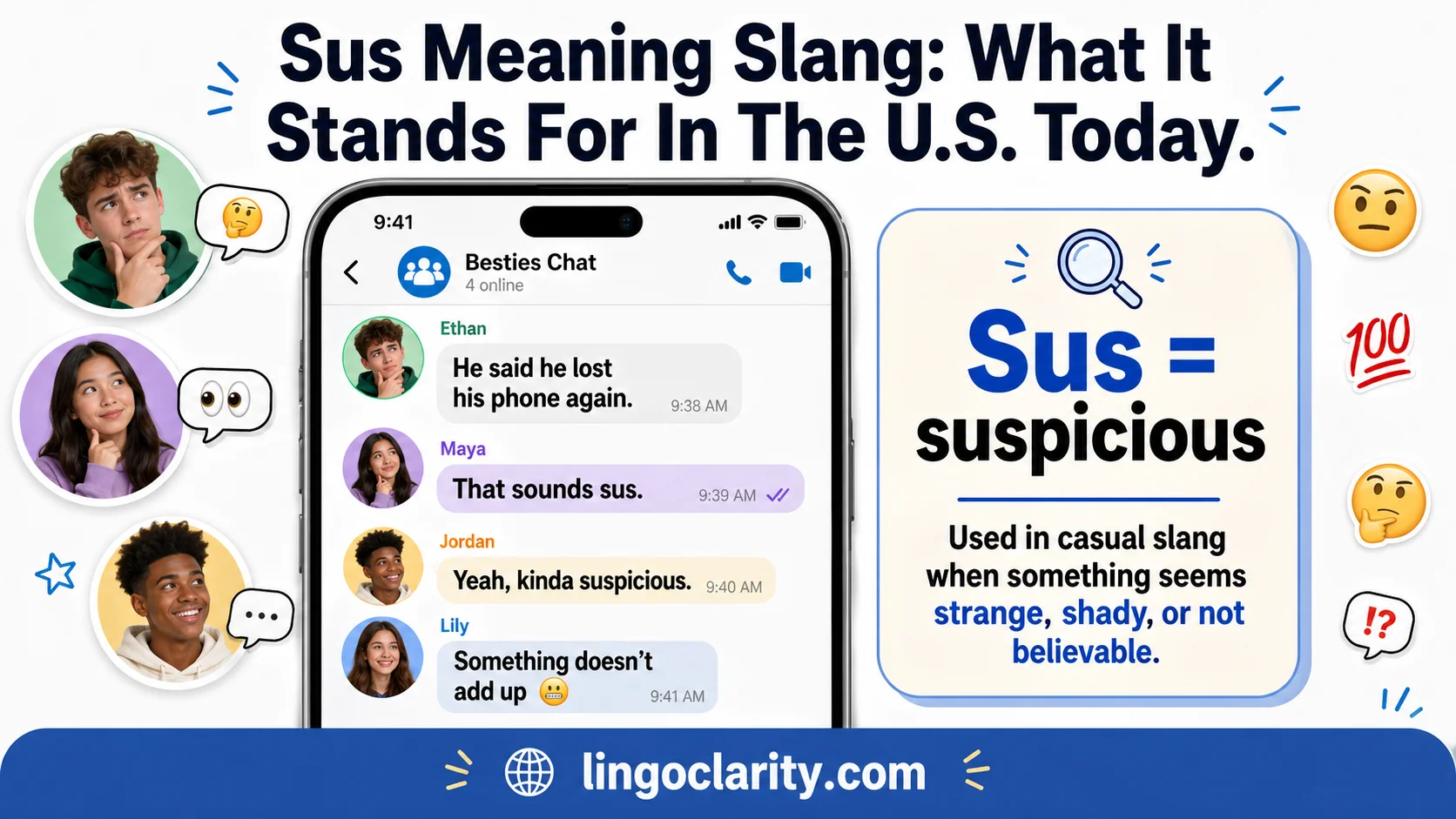
The sus meaning in slang is simple: sus means suspicious, suspect, sketchy, or not fully trustworthy. People use it when a person, story, excuse, link, message, or situation feels off.
Merriam-Webster defines sus as slang for “suspicious” or “suspect,” while the OED says it is formed by shortening “suspect” or “suspicious.”
The word is casual, so it fits texting, gaming chats, memes, social media comments, and relaxed conversation. It became especially popular through Among Us, although Merriam-Webster notes that the slang existed before the game made it mainstream online.
Because sus can sound playful or accusatory, context matters. “That’s sus” can be a joke between friends, a warning about a scam link, or a serious comment about behavior that does not add up.
Quick Answer
Sus is short for suspicious or suspect. It means something seems strange, shady, doubtful, or hard to trust.
Examples:
“That email looks sus.”
“Your excuse sounds sus.”
“He changed his story twice. That’s sus.”
Use sus in casual settings. In formal, professional, or serious situations, use “suspicious,” “questionable,” or “concerning” instead.
What Does Sus Mean In Slang?
In slang, sus means something seems doubtful, strange, shady, or hard to trust. It is usually a shortened form of “suspicious” or “suspect.”
You might call something sus when the details do not add up:
“That link looks sus. Don’t click it.”
“He said he forgot, but his timing is sus.”
“You disappeared when the bill came. Sus.”
The word does not prove that someone did anything wrong. Instead, it means something feels questionable. Think of it as a quick way to say, “I’m not sure I trust this.”
What Does Sus Mean In Texting?
In texting, sus usually means “that sounds suspicious” or “that seems off.” It is short, casual, and easy to use when reacting quickly.
Examples:
“Why did she delete the message? Sus.”
“A random account offered me free shoes. That’s sus.”
“You said you were asleep, but you liked my post. Sus.”
In friendly texting, sus often sounds playful. Still, tone depends on the relationship. A close friend may laugh at “you’re sus,” while a stranger may read it as rude.
How To Pronounce Sus
Sus is pronounced “suhs.” It rhymes with “bus,” “plus,” and “us.”
Do not pronounce it like “soos.” It has one syllable and is usually said quickly.
Example: “That’s sus” sounds like “That’s suhs.”
How To Use Sus Naturally
Use sus when something seems suspicious, odd, risky, or not believable. It works best in short, casual sentences.
Good examples:
“That excuse sounds sus.”
“This website looks sus.”
“His story changed twice. That’s sus.”
“Free tickets from a random profile? Very sus.”
“That charge on my card is sus.”
You can also use it as a one-word reaction:
“Sus.”
That usually means, “I noticed something weird about that.”
When Sus Sounds Playful Vs. Serious
Sus can be light or serious depending on context.
Playful:
“You took the last cookie and blamed the dog? Sus.”
“You suddenly love cleaning before guests arrive? Sus.”
Serious:
“That login email looks sus.”
“This seller has no reviews. Pretty sus.”
“Someone changed the password. That’s sus.”
If the situation involves safety, money, work, or trust, be more specific. Instead of only saying “That’s sus,” explain what seems wrong.
Better: “That link is suspicious because the sender’s address does not match the company.”
When Not To Use Sus
Do not use sus in formal writing, serious reports, legal situations, or professional emails unless the workplace tone is very casual. Use clearer words instead.
| Context | Better Choice | Example |
|---|---|---|
| Texting a friend | sus | “That excuse is sus.” |
| Work email | concerning | “This charge looks concerning.” |
| School essay | suspicious | “The character’s behavior is suspicious.” |
| Safety warning | suspicious | “Do not open suspicious links.” |
| Customer support | questionable | “The account activity appears questionable.” |
Also avoid calling a person sus during sensitive conversations. It can sound like you are accusing them without evidence.
Sus In Gaming And Among Us
Sus became especially popular in gaming culture because of Among Us, a social deduction game where players try to find hidden impostors. In the game, players call someone sus when that person’s movement, timing, or explanation seems suspicious.
Examples:
“Red is sus.”
“Blue was near the body.”
“You skipped the vote? That’s sus.”
However, sus did not begin with Among Us. The game helped make the word widely recognizable online, but the slang existed earlier. That matters because sus is now bigger than gaming. People use it in texts, memes, social media comments, and everyday casual speech.
Sus Vs. Suss Vs. Suss Out
Sus and suss look similar, but they are not always used the same way.
Most of the time, sus means suspicious.
Example: “That message is sus.”
By contrast, suss out means to figure out, investigate, or understand something.
Example: “I need to suss out what went wrong.”
In simple terms, sus points to doubt, while suss out points to figuring something out.
Synonyms For Sus
The best synonym depends on tone.
Casual synonyms:
Sketchy
Shady
Fishy
Off
Weird
Questionable
More formal synonyms:
Suspicious
Concerning
Doubtful
Untrustworthy
Dubious
Examples:
“That website looks sus.”
“The checkout page feels sketchy.”
“The sender’s email address seems suspicious.”
Antonyms include legit, trustworthy, normal, honest, clear, and believable.
Example:
“That link looks sus.”
“No, it’s legit.”
Common Mistakes With Sus
One mistake is using sus as if it proves guilt. It does not. It only means something seems suspicious.
Weak: “He is sus, so he lied.”
Better: “His story sounds sus because the details changed.”
Another mistake is using sus in formal contexts. In professional writing, use “suspicious,” “questionable,” or “concerning.”
A third mistake is overusing it. If everything is sus, the word loses impact. Use it when something genuinely seems off, or when you are clearly joking.
How To Reply When Someone Says Sus
Your reply depends on whether they are joking or serious.
If they are joking:
“Caught me.”
“Okay, fair.”
“Not sus, just mysterious.”
If they are serious:
“What seems suspicious about it?”
“I can explain.”
“Good point. That does look sketchy.”
If they are warning you:
“Thanks, I won’t click it.”
“I’ll double-check the sender.”
“That’s a red flag.”
Related Slang Words
Sketchy means suspicious or unsafe.
“Do not meet there. That place looks sketchy.”
Shady suggests dishonesty.
“That seller seems shady.”
Red flag means a warning sign.
“Asking for payment by gift card is a red flag.”
Legit means real, trustworthy, or acceptable.
“The website is legit.”
Sussy is a more playful, meme-style version of sus.
“You’re acting sussy.”
Examples Of Sus In Sentences
“That email from the bank looks sus.”
“She said she was busy, but then posted from the party. Sus.”
“This deal is way too cheap. It feels sus.”
“Why are you smiling like that? Sus.”
“He gave three different answers, which is sus.”
“Random download links are always sus.”
“Your explanation is not wrong, but it sounds a little sus.”
FAQs About Sus
What does sus mean?
Sus means suspicious, suspect, sketchy, or not fully trustworthy. It describes something that seems strange, doubtful, or off.
What does sus mean in texting?
In texting, sus means a message, excuse, link, or behavior seems suspicious. It is usually casual and often playful.
Is sus a bad word?
No. Sus is not a bad word. However, it can sound rude if you use it as a serious accusation.
Does sus mean someone is lying?
Not always. It means something seems doubtful or suspicious. A person can sound sus without definitely lying.
Can adults use sus?
Yes, but context matters. It sounds natural in casual conversation, texting, gaming, or joking. It may sound forced in formal settings.
Can I use sus at work?
Use it only in casual workplace chat. In emails, reports, or serious conversations, use “suspicious,” “questionable,” or “concerning.”
What does sus mean in Among Us?
In Among Us, sus means a player seems suspicious and might be the impostor. The word became strongly associated with the game, especially in online memes.
What is the difference between sus and suspicious?
Sus is casual slang. Suspicious is the standard word for formal or serious situations.
Final Takeaway
Sus means suspicious, suspect, or not fully trustworthy. Use it when something feels off, sketchy, or questionable. It is best for texts, gaming, memes, and casual speech. For serious situations, use a clearer word and explain what seems wrong.
