
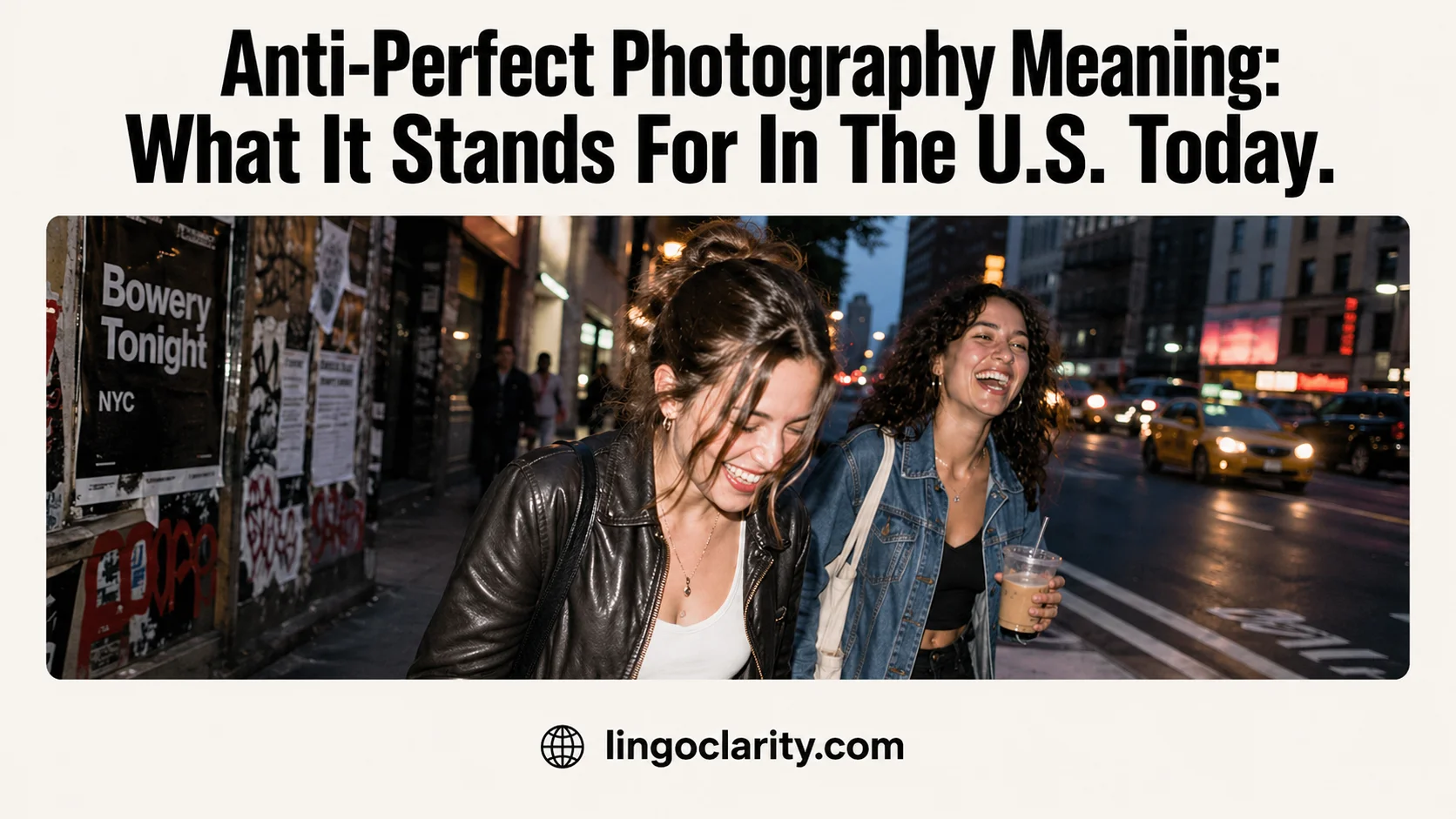
Anti-perfect photography means a deliberate photo style that values mood, honesty, and human feeling over a flawless finish. An anti-perfect photo may include blur, grain, harsh flash, uneven light, odd framing, visible skin texture, or a messy background—but those imperfections must serve the image.
In simple terms, anti-perfect photography is not bad photography. It is photography that rejects over-polished, overly posed, heavily retouched perfection when a rougher image feels more alive.
What Anti-Perfect Photography Means
Anti-perfect photography is an intentional approach to making images feel real rather than flawless. It embraces small visual “mistakes” when they add emotion, movement, intimacy, or truth.
A slightly blurred dance-floor photo can feel more exciting than a perfectly frozen one. A direct-flash portrait may feel more immediate than a softly lit studio image. A grainy street scene may feel more honest than a clean, heavily edited version.
The key word is intentional. Anti-perfect photography does not mean accepting every weak image. If the subject is unclear, the moment has no energy, or the flaw distracts from the story, the photo is not stronger because it is imperfect. It is simply unsuccessful.
Definition In Plain English
Anti-perfect photography means intentionally imperfect photography that uses flaws to create feeling.
It often looks:
- Candid
- Raw
- Grainy
- Loosely framed
- Emotionally direct
- Less retouched
- More human than polished
The style pushes back against the idea that every good photo must be sharp, clean, symmetrical, smooth, and technically perfect.
Why Anti-Perfect Photography Is Popular Now
Anti-perfect photography has become more relevant because audiences are surrounded by polished content. Social feeds, AI-generated images, beauty filters, product campaigns, and retouched portraits have made visual perfection feel common. As a result, images with texture, accident, and imperfection can feel more believable.
This is especially clear in 2026 photography trends, where authenticity, candid moments, analog influence, grain, blur, and emotional storytelling are repeatedly described as major visual directions.
The appeal is simple: when everything looks too perfect, imperfection can feel like proof of life.
How Anti-Perfect Photography Looks
Anti-perfect photography can take many forms, but it usually includes one or more of these visual traits:
- Motion blur that shows energy
- Film grain or digital noise that adds texture
- Direct flash that feels spontaneous
- Crooked or loose framing
- Off-center subjects
- Unposed expressions
- Natural skin texture
- Messy rooms, streets, or backgrounds
- Uneven light or shadow
- A snapshot-like feeling
- A sense that the moment was lived, not staged
A strong anti-perfect image still has a subject, mood, and point of view. It may look casual, but it should not feel pointless.
Anti-Perfect Photography Vs. Bad Photography
The difference between anti-perfect photography and bad photography is purpose.
A bad photo usually fails because the photographer did not control the image enough. The subject may be lost, the lighting may be unusable, or the composition may feel accidental in a distracting way.
An anti-perfect photo breaks the rules for a reason. The blur may show motion. The harsh flash may create immediacy. The grain may add atmosphere. The messy background may make the scene feel lived-in.
A useful test is to ask: Does the flaw add something?
If the answer is yes, the imperfection may work. If the answer is no, it probably weakens the image.
How To Use The Phrase Correctly
Use “anti-perfect photography” when describing a visual style that intentionally avoids a flawless, polished look.
Good examples:
“The campaign uses anti-perfect photography to make the brand feel more human.”
“Her wedding gallery mixes elegant portraits with anti-perfect reception photos full of blur, flash, and movement.”
“We want the shoot to feel candid, warm, and anti-perfect—not stiff or overproduced.”
Avoid using the phrase when you simply mean a photo is technically poor.
Weak usage:
“This photo is out of focus, so it is anti-perfect photography.”
Better usage:
“The soft focus works because it gives the portrait an intimate, anti-perfect mood.”
When To Use Anti-Perfect Photography
Anti-perfect photography works best when emotion matters more than technical polish.
It fits especially well in:
- Street photography
- Lifestyle photography
- Wedding candids
- Fashion editorials
- Music photography
- Youth culture campaigns
- Behind-the-scenes content
- Personal branding shoots
- Documentary-style projects
- Social media storytelling
Brands often use this style when they want to feel approachable, youthful, artistic, spontaneous, or less corporate. A skincare brand might show real skin texture. A clothing brand might use direct flash and imperfect poses. A restaurant might show a crowded table with motion blur instead of a sterile food shot.
When Not To Use Anti-Perfect Photography
Anti-perfect photography is not right for every project.
Avoid it when the image needs precision, clarity, or technical trust. Product pages, medical images, legal documentation, luxury catalog photography, real estate listings, and formal headshots often need clean execution.
It can also fail when the “imperfection” feels forced. Fake candids, overdone grain, random blur, and messy composition can look like a trend pasted onto an image instead of a natural creative choice.
The style works best when it feels earned.
How To Create Anti-Perfect Photography
Start with a real moment. Anti-perfect photography depends on life, movement, and atmosphere. Look for laughter, tension, gesture, weather, texture, awkwardness, closeness, or motion.
Then choose one or two imperfections that support the mood.
For example:
- Use a slower shutter speed to capture movement.
- Try direct flash for a raw party-photo effect.
- Keep natural shadows instead of flattening the scene.
- Let the background stay slightly messy if it adds context.
- Avoid over-smoothing skin.
- Crop loosely if the image feels more immediate that way.
- Keep some grain if it adds warmth or nostalgia.
Do not add every imperfection at once. Blur, grain, harsh flash, crooked framing, and heavy color shifts can quickly become gimmicky. The best anti-perfect photos still feel controlled.
How To Edit Anti-Perfect Photography
Editing should protect the image’s energy. The goal is not to make the photo look unfinished. The goal is to keep it from looking overprocessed.
Good editing choices may include:
- Light grain
- Natural contrast
- Softer highlights
- Warmer or moodier color
- Minimal skin retouching
- Slightly faded tones
- Preserved shadows
- Less aggressive sharpening
Avoid plastic skin, extreme HDR, fake film presets, and heavy filters that make the photo look artificial. Anti-perfect photography should feel human, not careless or over-styled.
Anti-Perfect Photography Vs. Related Terms
Candid Photography: Candid photography means the subject is not posed. A candid photo can be polished or anti-perfect.
Raw Photography: Raw photography can mean an unpolished visual feeling, but “RAW” also refers to a camera file format. Context matters.
Documentary Photography: Documentary photography focuses on real people, places, and events. It may use anti-perfect qualities, but it is not automatically anti-perfect.
Wabi-Sabi Photography: Wabi-sabi is connected to beauty in imperfection, impermanence, age, and incompleteness. In photography, it often values overlooked, worn, simple, or transient details.
Lo-Fi Photography: Lo-fi photography uses low-fidelity visual qualities such as grain, blur, cheap-camera effects, or old digital-camera textures.
Anti-Aesthetic: Anti-aesthetic is broader. It rejects conventional beauty and may look deliberately awkward, ugly, chaotic, or unpolished.
Examples Of Anti-Perfect Photography
A wedding reception photo where the couple is laughing, the flash is harsh, and the background is chaotic—but the image feels joyful and alive.
A street photo where a person walks through the frame slightly blurred, making the city feel fast and real.
A fashion campaign shot with direct flash, visible skin texture, and casual posing instead of airbrushed perfection.
A musician backstage, photographed in low light with grain and uneven color, creating intimacy.
A family photo where the child is moving, the room is messy, and everyone looks genuinely relaxed.
A brand shoot where the product appears in a real kitchen instead of a spotless studio setup.
Natural Sentence Examples
“The photographer used anti-perfect photography to make the campaign feel warmer and less staged.”
“The blur is not a mistake; it gives the image its anti-perfect energy.”
“This gallery works because the anti-perfect details support the story.”
“The brand wanted direct flash, real texture, and an anti-perfect mood.”
“Her portraits are polished enough to feel intentional but imperfect enough to feel human.”
Synonyms And Similar Phrases
Close alternatives include:
- Imperfect photography
- Raw photography
- Unpolished photography
- Candid photography
- Documentary-style photography
- Lo-fi photography
- Natural photo style
- Lived-in photography
- Snapshot aesthetic
- Authentic visual style
These terms are related, but they are not identical. “Candid” describes an unposed moment. “Lo-fi” describes a low-fidelity look. “Anti-perfect” describes a creative rejection of flawless visual standards.
Common Mistakes
The biggest mistake is thinking every blurry or grainy image is anti-perfect. Imperfection alone is not enough.
Another mistake is over-editing the style. If the grain, blur, flash, and color treatment look too forced, the image may feel artificial.
A third mistake is using anti-perfect photography as an excuse to avoid learning technique. Photographers still need to understand light, timing, composition, focus, and editing. The better you understand the rules, the more effectively you can break them.
FAQs
What does anti-perfect photography mean?
Anti-perfect photography means a photo style that uses intentional imperfection to create mood, honesty, movement, or emotion. It values feeling over a flawless finish.
Is anti-perfect photography the same as bad photography?
No. Bad photography usually lacks control or purpose. Anti-perfect photography may include flaws, but those flaws support the image.
Is anti-perfect photography a trend?
Yes, it is part of a wider shift toward candid, authentic, analog-inspired, and emotionally driven imagery. This shift has become especially visible in 2026 photography trend coverage.
Can anti-perfect photography be edited?
Yes. Anti-perfect photography can be edited, but the editing should preserve the natural energy of the image. Light grain, natural texture, and restrained color work usually fit better than heavy retouching.
What makes an anti-perfect photo successful?
A successful anti-perfect photo has intention. The blur, grain, flash, crop, or mess should help the viewer feel something or understand the moment more clearly.
Final Takeaway
Anti-perfect photography is not about making sloppy images. It is about choosing honesty, mood, and human presence over sterile perfection. The style works when imperfection adds meaning. A strong anti-perfect photo may be blurred, grainy, messy, or harshly lit—but it still feels alive, intentional, and worth looking at.
