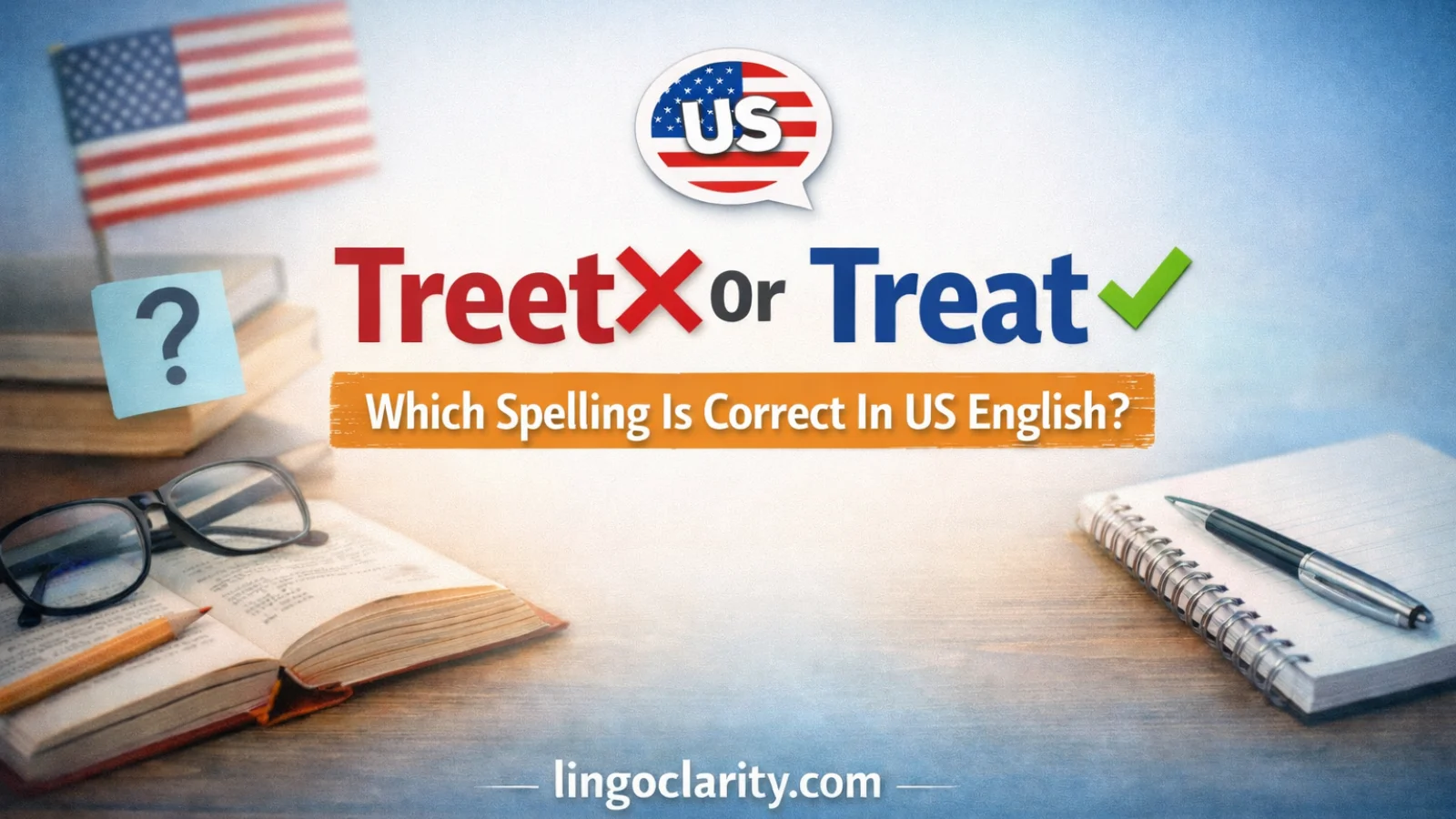
“Treet” shows up a lot in fast typing—especially around Halloween, when people write trick-or-treat on signs and invites. The problem is simple: treet looks believable because it sounds the same as treat, but it’s not the standard spelling.
This guide makes the choice easy. You’ll learn the correct spelling, why the misspelling happens, the few times Treet is actually correct as a name, and quick fixes you can use in school and professional writing.
Quick Answer
Treat is the correct spelling in standard US English.
Treet is usually a misspelling—use it only when you are writing an official name (like a product or company).
Why People Confuse Them
A few things push writers toward treet:
- Same pronunciation: treat sounds like “treet,” so your brain reaches for ee.
- EA spelling is unpredictable: English has many “ea” words that don’t behave the same way.
- Halloween speed-writing: Signs and captions get written quickly, so typos stick.
- Spellcheck doesn’t always save you: “Treet” can look like a plausible word, so it slips through.
What “Treat” Means In US English
Treat is a standard word used everywhere in American writing—casual and formal. It works as both a verb and a noun.
Treat As A Verb
Use treat when you mean:
- behave toward someone in a certain way (“treat people with respect”)
- handle/consider something (“treat this as confidential”)
- pay for someone (“I’ll treat”)
- give medical care (“treat an infection”)
US-style examples:
- “Please treat this message as time-sensitive.”
- “They treated us to lunch.”
- “The clinic will treat the condition.”
Treat As A Noun
Use treat when you mean:
- a pleasant reward or special snack (“a weekend treat,” “dog treats”)
- an occasion where someone pays (“Dinner is my treat”)
US-style examples:
- “We saved cake for a weekend treat.”
- “Coffee is my treat today.”
Why “Trick-Or-Treat” Is Never “Treet”
The standard Halloween phrase is trick-or-treat (also shown as “trick or treat” in some contexts), and it uses treat. Merriam-Webster lists it as a Halloween practice and shows the standard spelling.
Correct:
- “Happy trick-or-treating!”
- “Trick or treat!”
Incorrect:
- “Trick-or-treet”
When “Treet” Is Actually Correct
Use Treet (capital T) only when it’s an official name. Two common examples people run into online:
Treet As A Food Brand Name
Armour Star Treet is a canned luncheon loaf sold in the US under the name Treet.
Example:
- “We packed Treet for the camping trip.”
Treet As A Company Or Product Name
Treet is also used as a brand name in shaving products (for example, the Treet Corporation site lists blades and razors).
Example:
- “He prefers Treet blades.”
Quick Tip: If you mean a brand, match the official spelling on the label. If you mean the English word, write treat.
Spelling Tip That Actually Helps
When you’re unsure, do this quick swap test:
- If you can replace the word with candy, reward, snack, handle, respect, or pay, you want treat.
- If you’re referring to a specific product name printed on packaging, you might need Treet.
Common Mistakes And Easy Fixes
- Wrong: “That was a nice treet.”
Right: “That was a nice treat.” - Wrong: “Please treet this as urgent.”
Right: “Please treat this as urgent.” - Wrong: “Kids yelled ‘trick-or-treet!’”
Right: “Kids yelled ‘trick-or-treat!’” - Awkward: “I will treat the report tomorrow.” (when you mean handle)
Better: “I will review the report tomorrow.”
Also okay: “I will handle the report tomorrow,” depending on your tone.
Everyday Examples You Can Copy
- Text: “You crushed that exam. Coffee is my treat.”
- Work: “Please treat this request as confidential.”
- Home: “I brought donuts as a treat.”
- Medical: “They can treat the infection with medicine.”
- Pets: “Give your dog a small treat for good timing.”
- Halloween: “We have treats—please take two.”
- Brand name: “We bought Treet because that’s the product name.”
Comparison Table
| Context | Best Choice | Why |
|---|---|---|
| Halloween phrase | treat | Standard spelling is “trick-or-treat.” |
| Dessert, candy, reward | treat | Standard noun meaning. |
| Behavior toward someone | treat | Standard verb meaning. |
| Medical care | treat | Standard verb meaning. |
| Official product/company name | Treet | Proper name spelling. |
Mini Quiz
Fill in the blank with treat or Treet:
- “Please ____ this as confidential.”
- “She gave the kids a small ____ after practice.”
- “Tonight’s movie is my ____.”
- “We bought ____ for the pantry because that’s the brand name.”
- “The doctor will ____ the rash with a cream.”
Answer Key:
- treat 2) treat 3) treat 4) Treet 5) treat
FAQs
Is “treet” ever correct?
Yes—only as a proper name. If a brand or company spells it Treet, match the official spelling.
Is “treat” the right spelling for Halloween?
Yes. The standard phrase is trick-or-treat (also shown as “trick or treat” in some writing), and it uses treat, not “treet.”
Can “treat” mean “pay for it”?
Yes. Standard usage includes “Dinner will be my treat” and “I’ll treat.”
Why does “treet” look so believable?
Because it matches the sound of treat in speech, and English spelling doesn’t always map cleanly to pronunciation.
What should I write in a formal email?
Use treat. Avoid treet unless you’re referring to an official name like a product or company.
Conclusion
If you’re choosing between treet and treat, pick treat—it’s the correct spelling in standard US English.
Use Treet only when you mean a proper name (brand or company).
Bottom line: When in doubt, write treat and move on.

2 thoughts on “Treet Or Treat: Which Spelling Is Correct In US English?”
Comments are closed.