
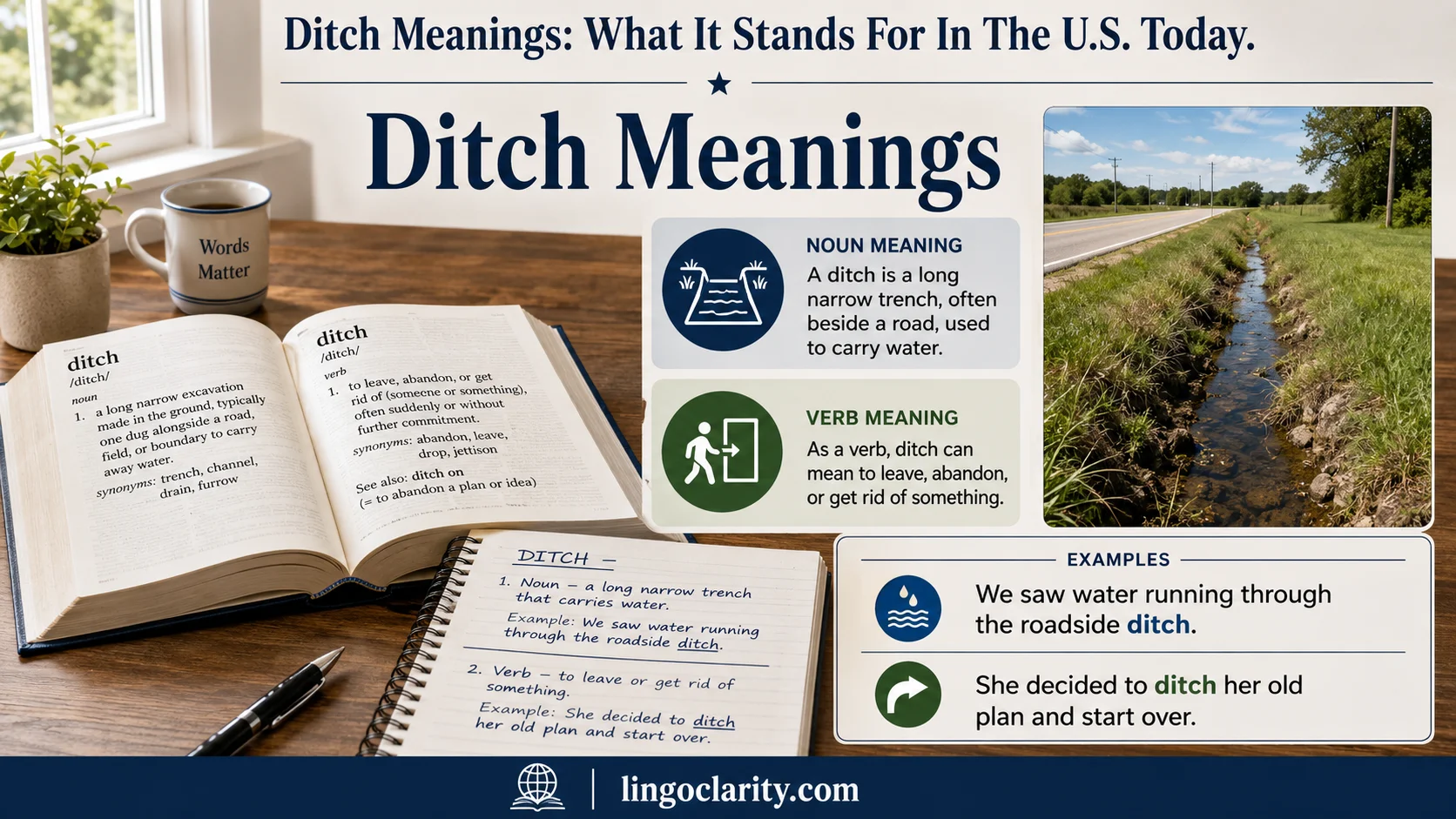
Ditch meanings are simple once you separate the word’s main uses. As a noun, a ditch is a long, narrow channel dug in the ground, often near a road, field, or yard to carry water away. As a verb, ditch usually means to leave, drop, skip, abandon, or get rid of someone or something.
In everyday US English, ditch meanings often depend on context. Someone might ditch an old phone, ditch a bad plan, ditch class, or feel upset because a friend ditched them.
Quick Answer
Ditch meanings include both a physical noun and an informal verb. As a noun, ditch means a long, narrow channel in the ground. As a verb, it means to leave, drop, skip, abandon, or get rid of something.
What Ditch Meanings Include
The main ditch meanings are easy to understand when you look at the word by context. The noun meaning refers to a channel in the ground, while the verb meaning refers to leaving, skipping, or removing something.
Ditch As A Noun
As a noun, ditch means a long, narrow channel dug in the ground. Ditches are often found beside roads, farms, fields, yards, or rural paths. Their main purpose is usually to guide water away from an area.
Examples:
The car slid into a ditch after the storm.
The workers cleared leaves from the drainage ditch.
A farmer dug a ditch to help water leave the field.
A ditch is not just any hole. It is usually long, narrow, and connected to drainage, land use, or a roadside area.
Ditch As A Verb
As a verb, ditch means to leave, drop, skip, abandon, or get rid of something. This meaning is common in informal American English.
Examples:
I ditched my old backpack after the zipper broke.
They ditched the original plan and started over.
We ditched the crowded restaurant and ordered takeout.
She ditched the app because it kept freezing.
The verb can describe objects, habits, plans, events, school, and people. The meaning changes slightly depending on what comes after ditch.
Ditch Meanings By Context
| Context | Meaning | Example |
|---|---|---|
| Road Or Field | A channel in the ground | The truck landed in a muddy ditch. |
| Old Item | Get rid of something | I ditched my broken phone case. |
| Plan Or Idea | Abandon or stop using it | They ditched the first idea. |
| School Or Class | Skip without permission | He ditched class on Friday. |
| Person | Leave someone behind | She ditched me at the mall. |
| Habit | Stop doing something | I’m trying to ditch late-night snacking. |
| Aircraft | Make an emergency landing on water | The pilot had to ditch the plane. |
Common Ditch Meanings In Everyday English
To Ditch Something
To ditch something means to get rid of it, stop using it, or decide it is no longer useful.
Examples:
I ditched my old laptop because it kept crashing.
She ditched her heavy coat when the weather warmed up.
They ditched the outdated software.
This use usually sounds casual and neutral. It does not usually sound rude unless the object is important or the context is emotional.
To Ditch A Plan
To ditch a plan means to abandon it, cancel it, or stop following it.
Examples:
We ditched the road trip because of the weather.
The team ditched the first design after the test failed.
They ditched the meeting and handled everything by email.
This meaning is common in everyday speech. In formal writing, use “cancel,” “abandon,” “drop,” or “discontinue” instead.
To Ditch Class Or School
Ditching class means skipping one class without permission. When someone ditches school, they skip the entire school day without approval.
Examples:
He got marked absent because he ditched class.
They planned to ditch school and go to the beach.
My teacher called home after I ditched math.
This is informal US English. It does not mean officially dropping a class from your schedule. If a student officially removes a course, they “drop” the class. If they simply do not attend without permission, they “ditch” or “skip” class.
To Ditch Someone
To ditch someone means to leave them behind, cancel plans with them, avoid them, or end a connection with them. This use often sounds negative.
Examples:
Please don’t ditch me at the concert.
He ditched his friends when he joined a new group.
She felt hurt because her date ditched her.
“Ditch someone” is stronger than “leave someone.” If you say, “He left early,” the sentence may sound neutral. If you say, “He ditched me,” it suggests disappointment, disrespect, or hurt feelings.
Tone, Context, And Formality
Ditch changes tone depending on how it is used.
When Ditch Sounds Neutral
As a noun, ditch is a normal everyday word. It does not sound especially formal or informal.
Examples:
The storm filled the ditch with water.
The city cleaned the roadside ditch.
As a verb, ditch can also sound neutral when it refers to an object, habit, or old plan.
Examples:
I ditched my old shoes.
We ditched the first draft.
When Ditch Sounds Casual
The verb ditch is usually casual. It fits conversation, texting, social media, headlines, and informal writing.
Examples:
Let’s ditch this boring movie.
I need to ditch this messy habit.
They ditched the party early.
This tone is natural in everyday speech, but it may be too relaxed for formal business, academic, or legal writing.
When Ditch Sounds Rude Or Hurtful
Ditch can sound rude when it involves people.
Examples:
He ditched me without texting.
She ditched her friends at the event.
They ditched him when he needed help.
In these sentences, ditch suggests careless or unfair treatment.
Better Formal Alternatives To Ditch
In formal writing, choose a more precise word.
| Informal Sentence | Better Formal Version |
| The company ditched the policy. | The company discontinued the policy. |
| They ditched the project. | They abandoned the project. |
| She ditched the files. | She discarded the files. |
| We ditched the meeting. | We canceled the meeting. |
| He ditched class. | He skipped class without permission. |
Use ditch when the tone is casual. Use abandon, cancel, discard, discontinue, remove, or skip when the writing needs to sound more formal or exact.
Similar Words And Their Differences
Ditch Vs. Skip
These two words can overlap, but they do not always carry the same tone.
Skip is more neutral. You can skip breakfast, skip a song, skip a meeting, or skip a page.
Ditch sounds more casual and sometimes more careless. It often suggests avoiding something, leaving something behind, or not showing up when expected.
Examples:
I skipped breakfast because I was late.
He ditched class and got in trouble.
We skipped the long introduction.
They ditched the plan after one problem.
Ditch Vs. Abandon
Abandon is more formal and serious than ditch. It often suggests leaving something completely.
Examples:
Casual: They ditched the plan.
Formal: They abandoned the plan.
Casual: We ditched the old strategy.
Formal: We abandoned the old strategy.
Use abandon in professional or serious writing. Use ditch in casual speech.
Ditch Vs. Discard
Discard means to throw something away or stop using it. It is more formal than ditch.
Examples:
Casual: I ditched the old receipts.
Formal: I discarded the old receipts.
Casual: She ditched the broken charger.
Formal: She discarded the broken charger.
Use discard when the sentence focuses on removing or throwing away an item.
Ditch Vs. Dump
Dump is casual and can sound harsher than ditch. It often appears in relationship contexts.
Examples:
He dumped his girlfriend.
She ditched her date at the restaurant.
Dump usually means ending a romantic relationship. Ditch can mean leaving someone behind, canceling on someone, or avoiding someone.
Pronunciation And Grammar
Pronunciation
Ditch is pronounced “dich.” It has one syllable and rhymes with pitch, switch, and which.
Examples:
ditch
pitch
switch
which
Part Of Speech
Ditch can work as a noun or a verb.
As a noun:
The bike fell into the ditch.
As a verb:
I need to ditch these old receipts.
Verb Forms
| Form | Example |
| Ditch | I need to ditch this habit. |
| Ditches | He ditches class too often. |
| Ditched | They ditched the plan yesterday. |
| Ditching | We are ditching the old design. |
Last-Ditch Meaning
Last-ditch means final or desperate. A last-ditch effort is a final attempt to succeed when failure seems likely.
Examples:
The team made a last-ditch effort to win.
She sent one last-ditch email before the deadline.
They tried a last-ditch plan to save the event.
In this phrase, ditch does not usually refer to a real physical ditch. The phrase means a final attempt made when there may not be another chance.
Synonyms And Antonyms Of Ditch
Synonyms For Ditch As A Noun
Good synonyms for ditch as a noun include:
trench
channel
drain
furrow
gutter
These words are close, but they are not always perfect replacements. A trench may be deeper. A gutter may be part of a street or roof. A furrow is usually connected to farming.
Synonyms For Ditch As A Verb
Good synonyms for ditch as a verb include:
abandon
discard
drop
dump
skip
scrap
leave
get rid of
stop using
The best synonym depends on the sentence. Use abandon for plans, discard for objects, skip for classes or events, and dump for a harsh relationship meaning.
Antonyms For Ditch
For the verb meaning, common antonyms include:
keep
retain
continue
attend
stay
support
maintain
Examples:
I ditched the old version. → I kept the old version.
He ditched class. → He attended class.
They ditched the plan. → They continued the plan.
For the noun meaning, there is no perfect everyday opposite. Depending on the context, words such as level ground, bank, mound, or raised ground may work.
Common Mistakes With Ditch
Mistake 1: Using Ditch For Any Hole
A ditch is not every kind of hole. It is usually long and narrow, often used for drainage or irrigation.
Better:
The road had a deep ditch beside it.
Not ideal:
There was a small round ditch in the yard.
Mistake 2: Confusing Ditch Class With Drop Class
Ditch class means skip class without permission. Drop a class means officially remove it from your schedule.
Examples:
He ditched class and got marked absent.
She dropped the class before the deadline.
Mistake 3: Using Ditch In Formal Writing
Ditch may sound too casual in professional writing.
Casual:
The company ditched the old policy.
Formal:
The company discontinued the old policy.
Mistake 4: Using Ditch Someone Too Lightly
Ditch someone can sound rude or hurtful. Use it carefully when talking about people.
Example:
She felt hurt because her friends ditched her.
Everyday Example Sentences With Ditch
The car slid off the road and stopped in a muddy ditch.
The workers cleaned the drainage ditch before the storm.
The farmer dug a ditch to help drain the field.
I finally ditched my cracked phone case.
She ditched her old laptop after it stopped working.
They ditched the original plan after the budget changed.
We ditched the crowded restaurant and ate at home.
He got in trouble for ditching class.
Please do not ditch me at the concert.
I am trying to ditch the habit of checking my phone before bed.
The team made a last-ditch effort in the final minute.
The pilot had to ditch the aircraft during the emergency.
FAQs
What does ditch mean in simple words?
Ditch means a long, narrow channel in the ground or the act of leaving, dropping, skipping, abandoning, or getting rid of something. The noun is literal. The verb is usually informal.
Is ditch a slang word?
Ditch is not slang when it means a channel in the ground. As a verb, it is informal and sometimes slang-like, especially in phrases such as “ditch class,” “ditch school,” or “ditch someone.”
What does ditch someone mean?
Ditch someone means leave someone behind, cancel on them, avoid them, or end plans with them. It often sounds negative because it suggests careless or unfair treatment.
What does ditch class mean?
Ditch class means skip class without permission. It is common informal US English. A student who ditches class is absent when they are supposed to be there.
Does ditch mean abandon?
Yes, ditch can mean abandon in casual English. For example, “They ditched the plan” means they abandoned the plan. In formal writing, “abandon” is usually clearer.
What is a last-ditch effort?
A last-ditch effort is a final attempt to succeed when failure seems close. It usually does not refer to a real ditch.
Conclusion
Ditch meanings are practical once you separate the noun from the verb. As a noun, ditch means a channel in the ground. As a verb, it means to leave, drop, skip, abandon, or get rid of something.
In everyday US English, ditch is useful and easy to understand, but tone matters. Use it casually for old items, habits, bad plans, school, or events. Be careful with “ditch someone,” because it can sound rude or hurtful. For formal writing, choose clearer words such as abandon, discard, cancel, discontinue, or skip.
