
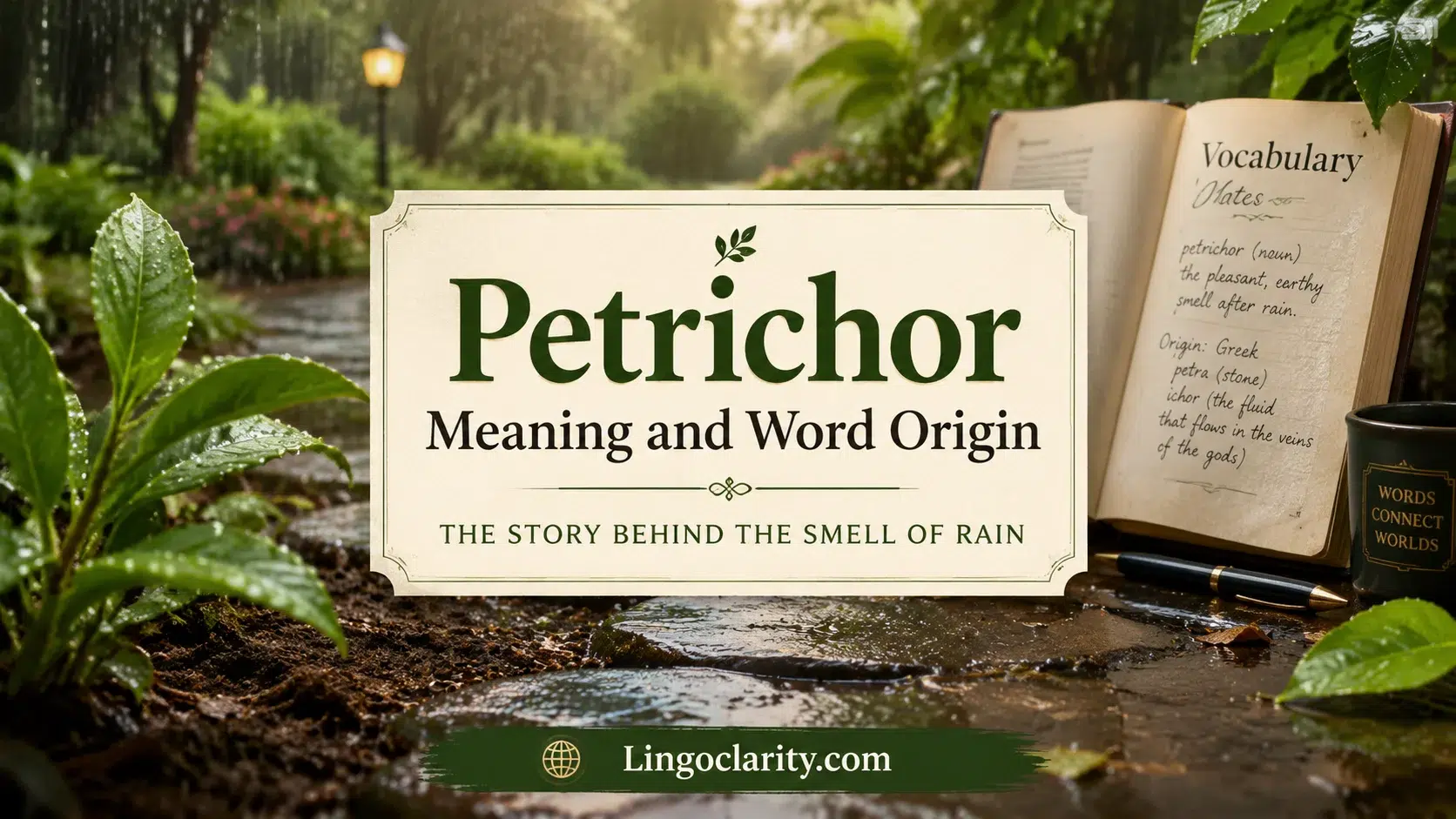
Petrichor meaning and word origin reveals the fascinating story behind one of the most beautiful words connected with nature. Petrichor describes the fresh, earthy smell that appears when rain falls on dry soil, rocks, and plants. It is the scent many people notice after a summer storm, often bringing feelings of comfort, calmness, and memories of rainy days.
Although humans have experienced this smell for centuries, the English language did not have a specific word for it until scientists introduced the term petrichor in 1964. The word combines scientific discovery with ancient Greek roots, creating a unique connection between language, nature, and chemistry.
This guide explores what petrichor means, where the word came from, the science behind the smell after rain, and why this unusual vocabulary word continues to fascinate writers, students, and language lovers around the world.
Quick Answer
Petrichor is the pleasant earthy smell produced when rain falls on dry ground. The word was created in 1964 by Australian scientists Isabel Joy Bear and Richard Thomas. It comes from the Greek words petra, meaning “stone,” and ichor, meaning the mythical fluid of the gods. The scent comes from natural compounds released from soil, plants, and rocks after rainfall.
TL;DR: Petrichor Meaning and Origin
- Petrichor means the fresh smell that appears after rain touches dry earth.
- The word was created by scientists Isabel Joy Bear and Richard Thomas in 1964.
- It comes from Greek roots meaning “stone” and “the fluid of the gods.”
- The smell comes from plant oils, soil compounds, and geosmin.
- Petrichor is not rain itself; it is the aroma created after rainfall.
- The word became popular because it describes a common experience that was difficult to name.
What Does Petrichor Mean?
The word petrichor refers to the earthy, fresh aroma that rises from the ground after rainfall, especially following a dry period. In simple terms, it is the smell people often describe as the “scent of rain.”
However, petrichor does not mean rain itself. The word describes the smell created when rain interacts with the natural environment. When raindrops hit dry soil, rocks, and plants, they release tiny compounds into the air. These compounds create the recognizable fragrance associated with wet earth.
For example:
- The sound of rain falling is not petrichor.
- Dark storm clouds are not petrichor.
- The smell coming from wet ground after rainfall is petrichor.
The word became popular because it gives a name to an experience that almost everyone recognizes. Before the term existed, people could describe the smell of rain but did not have one precise word for it.
Petrichor is a perfect example of how languages grow. When people discover, study, or experience something new, they often create words to describe it more clearly.
Where Did the Word Petrichor Come From?
The story behind the petrichor meaning and word origin begins with scientific research in Australia. Before the 1960s, people knew that rain produced a special smell, but the exact cause was not fully understood.
In 1964, Australian scientists Isabel Joy Bear and Richard Grenville Thomas studied this natural scent and introduced the word petrichor in the scientific journal Nature. Their goal was to create a term for the pleasant smell produced when rain interacts with dry surfaces.
The researchers combined two Greek words to form the term:
| Greek Root | Meaning |
|---|---|
| Petra | Stone or rock |
| Ichor | The mythical fluid flowing through the veins of Greek gods |
Together, the roots create the idea of a “fluid from stone,” representing the aromatic substances released from rocks and soil after rainfall.
Although petrichor sounds like an ancient word, it is actually a modern scientific creation. The Greek influence simply gave the term a memorable and meaningful structure.
The Greek Roots Behind Petrichor
The beauty of the word petrichor comes from the way it combines science with ancient language.
The first part, petra, comes from Greek and means “stone” or “rock.” This relates to the natural surfaces where rain interacts with stored organic compounds.
The second part, ichor, comes from Greek mythology. Ancient Greeks believed ichor was the special golden fluid that flowed through the bodies of their gods instead of ordinary blood.
By combining these ideas, scientists created a word that suggests a mysterious natural substance released from the earth after rain. The name sounds poetic, but it also reflects the scientific process behind the smell.
Many scientific terms use Greek or Latin roots because these languages provide precise meanings. Petrichor follows this tradition while also creating an emotional connection with nature.
Who Coined the Word Petrichor?
The word petrichor was created by two Australian researchers:
- Isabel Joy Bear
- Richard Grenville Thomas
Their research focused on the oils produced by plants and stored in dry rocks and soil. They discovered that rainfall helps release these substances into the air, creating the familiar smell people associate with wet earth.
Before their discovery, people around the world enjoyed the smell after rain but lacked a scientific name for it. Bear and Thomas gave this common experience a clear identity.
Their work shows how science and language often develop together. A scientific discovery may explain a natural event, while a new word helps people communicate that discovery.
Today, petrichor is used far beyond scientific discussions. Writers, photographers, students, and everyday speakers use it because it captures a feeling that many people instantly understand.
Why Does Rain Smell Like Petrichor?
The smell of petrichor is created through a combination of natural processes. Rain itself does not have a strong scent, but when raindrops interact with the environment, they release compounds that create the familiar earthy aroma people recognize after rainfall.
Several natural elements work together to produce petrichor:
The Role of Dry Soil
During dry weather, soil collects different organic materials, including plant compounds and minerals. When rain finally arrives, these materials are disturbed and released into the air.
This process is especially noticeable after a long period without rain. The longer the ground remains dry, the stronger the smell of petrichor can become when rainfall begins.
Plant Oils and Natural Compounds
Plants release natural oils that can settle on rocks and soil. During dry periods, these oils build up on surfaces around the environment.
When rain falls, water helps release these oils into the atmosphere. These airborne compounds contribute to the fresh, earthy smell associated with petrichor.
The Importance of Geosmin
One of the most important contributors to the smell of rain is geosmin. This organic compound is produced by soil microorganisms, especially a group of bacteria called actinomycetes.
Humans are extremely sensitive to geosmin. Even tiny amounts can be detected by the human nose, which is why people can notice the earthy smell of wet soil so easily.
However, geosmin and petrichor are not the same thing. Geosmin is only one component of the overall smell experience. Petrichor describes the complete aroma created after rain interacts with the environment.
How Raindrops Release the Smell
When raindrops hit dry, porous surfaces, they can create tiny air bubbles. These bubbles rise and carry scent molecules into the atmosphere.
The released particles spread through the air, allowing people to experience the smell of petrichor after rainfall.
Together, dry soil, plant oils, geosmin, and rain activity create the unique aroma that makes petrichor so recognizable.
Petrichor vs Geosmin: What Is the Difference?
Although petrichor and geosmin are closely connected, they describe different parts of the rain smell experience.
| Term | Meaning | Source | Example |
|---|---|---|---|
| Petrichor | The overall earthy smell after rain | Combination of natural compounds, soil, plants, and rainfall | “The petrichor after the storm filled the garden.” |
| Geosmin | A chemical compound with an earthy smell | Produced by soil microorganisms | “Geosmin creates the smell of fresh soil.” |
In simple terms:
Petrichor = the complete smell experience after rain
Geosmin = one compound that helps create the earthy smell
Understanding this difference makes the meaning of petrichor clearer. While geosmin plays an important role, petrichor represents the entire natural fragrance people notice after rainfall.
How Do You Pronounce Petrichor?
The word petrichor may look complicated at first, but its pronunciation is simple.
The common pronunciation is:
PET-ri-kor
Phonetic spelling:
/ˈpɛtrɪkɔːr/
The word has three parts:
- PET — like the word “pet”
- ri — a short “ri” sound
- kor — similar to “core”
A common mistake is saying “pet-tree-chor” with a strong emphasis on the middle part. In everyday American English, the pronunciation is smoother:
PET-ri-kor
Learning the pronunciation helps readers confidently use this interesting vocabulary word in conversations and writing.
Is Petrichor a Real Word?
Yes, petrichor is a real English word. Although it sounds poetic, imaginary, or ancient, it is a scientifically recognized term.
The word first appeared in scientific research in 1964 and later became popular in literature, online discussions, and everyday vocabulary. Today, many people use petrichor when talking about nature, weather, gardening, and memorable experiences.
Petrichor is also an example of how English continues to expand. Sometimes people experience something for generations before a specific word is created to describe it.
Other English words with interesting meanings include:
- Serendipity — a lucky discovery made unexpectedly
- Nostalgia — a sentimental feeling connected to the past
- Ephemeral — something that lasts for a short time
- Eloquent — expressing ideas beautifully and clearly
Like these words, petrichor became popular because it describes something meaningful that people already understood.
Petrichor Meaning in Literature and Everyday Language
Because petrichor describes a powerful sensory experience, writers often use it to create vivid images and emotional connections.
A single mention of the smell after rain can immediately create a scene in a reader’s mind. It may remind people of gardens, childhood memories, peaceful afternoons, or changes in seasons.
Examples of literary-style use:
- “The petrichor rising from the garden reminded her of rainy afternoons at her childhood home.”
- “After the storm ended, the air carried the calming scent of petrichor.”
In everyday conversations, people may use petrichor when discussing:
- Rainy weather
- Nature photography
- Gardening
- Seasonal changes
- Outdoor experiences
The word has also gained popularity online because many people enjoy sharing their appreciation for the smell after rain. Social media has helped introduce petrichor to readers who may have never encountered the term before.
Why Does Petrichor Feel Nostalgic?
Many people connect petrichor with memories because smell is strongly connected with emotions and personal experiences.
A rainy day can remind someone of:
- Childhood adventures
- Family gatherings
- School memories
- Time spent outdoors
- Peaceful moments in nature
The reason smells can trigger memories so strongly is that the sense of smell is closely connected with areas of the brain responsible for emotion and memory.
However, the emotional meaning of petrichor is different for everyone. Some people find it comforting and nostalgic, while others simply appreciate it as a pleasant natural scent.
The popularity of the word shows that language can capture feelings and experiences that are difficult to explain. Petrichor gives people a way to describe not only a smell but also the emotions connected with that moment.
Examples of Petrichor Used in Sentences
Learning a word becomes easier when you see how it works in real situations. Here are some examples of petrichor used naturally in sentences:
- The petrichor after the summer rain filled the garden with a fresh, earthy aroma.
- She opened the window to enjoy the peaceful scent of petrichor coming from the wet ground.
- Many people love petrichor because it reminds them of rainy days from childhood.
- The photographer captured the beauty of nature just after the storm, when the smell of petrichor filled the air.
- The first rainfall of the season brought a familiar wave of petrichor across the neighborhood.
- Writers often use petrichor to describe emotional moments connected with nature.
- After weeks of dry weather, the petrichor from the first rain felt refreshing and comforting.
- Learning the petrichor meaning and word origin reveals how science can inspire new vocabulary.
- The garden looked brighter, and the petrichor made the entire scene feel peaceful.
- She discovered the word petrichor while exploring interesting English words related to nature.
These examples show that petrichor is usually used as a noun when describing the smell or atmosphere created after rainfall.
Common Mistakes About Petrichor
Although petrichor is becoming more popular, people sometimes misunderstand its meaning. Understanding these common mistakes helps you use the word correctly.
Mistake 1: Thinking Petrichor Means Rain
Petrichor does not describe rain itself. It refers only to the smell created after rain interacts with the environment.
Incorrect:
“Petrichor was falling from the clouds.”
Correct:
“The petrichor after the rain smelled wonderful.”
Mistake 2: Believing Petrichor Is Only Wet Soil
Many people think petrichor only comes from soil. However, the smell is created through several sources, including plant oils, rocks, microorganisms, and natural compounds.
The ground plays an important role, but petrichor is a combination of different environmental elements.
Mistake 3: Thinking Petrichor Is an Ancient Word
The word sounds old because of its Greek roots, but petrichor is actually a modern scientific term created in 1964.
The roots are ancient, but the word itself is relatively new.
Mistake 4: Confusing Petrichor With Geosmin
Geosmin is a chemical compound that contributes to earthy smells, but it is not the same as petrichor.
Remember:
- Geosmin = one scent-producing compound
- Petrichor = the complete smell experience after rain
Dictionary-Style Explanation of Petrichor
Word:
Petrichor
Part of Speech:
Noun
Definition:
Petrichor is the pleasant earthy smell produced when rain falls on dry soil, rocks, and other natural surfaces.
Pronunciation:
PET-ri-kor
/ˈpɛtrɪkɔːr/
Word Origin:
The word petrichor was introduced in 1964 by Australian scientists Isabel Joy Bear and Richard Thomas.
It combines two Greek roots:
- Petra — meaning “stone” or “rock”
- Ichor — the mythical fluid believed to flow through the veins of Greek gods
Together, these roots represent the idea of a scent released from the earth after rainfall.
Synonyms and Related Expressions:
Petrichor does not have a perfect synonym, but related phrases include:
- Fresh rain smell
- Earthy aroma
- Wet earth scent
- After-rain fragrance
- Natural rain scent
Example Sentences:
- The petrichor after the storm made the countryside smell fresh.
- Many readers search for the meaning of petrichor because the word sounds unusual.
- Petrichor is one of the most fascinating vocabulary words connected with nature.
Frequently Asked Questions About Petrichor
What does petrichor mean?
Petrichor means the pleasant earthy smell that appears when rain falls on dry ground. It describes the aroma created when raindrops interact with soil, plants, rocks, and natural compounds.
The word does not refer to rain itself. Instead, it describes the scent that people notice after rainfall, especially after a long dry period.
Where did the word petrichor come from?
The word petrichor was created in 1964 by Australian scientists Isabel Joy Bear and Richard Thomas.
The term comes from two Greek roots:
- Petra, meaning stone or rock
- Ichor, meaning the mythical fluid of Greek gods
The combination creates the idea of a natural fragrance released from the earth after rain.
Who invented the word petrichor?
Scientists Isabel Joy Bear and Richard Thomas introduced the word petrichor while studying the smell produced when rain interacts with dry surfaces.
Their research examined plant oils and compounds released from rocks and soil after rainfall. Their discovery gave a scientific name to a smell that people had experienced for generations.
Why does rain create the smell of petrichor?
Rain creates petrichor because water releases scent-producing compounds from the environment.
The main contributors include:
- Plant oils stored on rocks and soil
- Organic compounds in dry ground
- Geosmin produced by soil microorganisms
- Tiny particles released when raindrops hit surfaces
Together, these natural elements create the fresh smell associated with rainfall.
Is petrichor an English word?
Yes, petrichor is a recognized English word. Although it has Greek roots, it was created as a modern scientific term in 1964.
Today, people use it in vocabulary discussions, literature, nature writing, and everyday conversations.
What is the difference between petrichor and geosmin?
Petrichor describes the complete smell experience after rain, while geosmin is a specific compound that contributes to the earthy scent.
In simple terms:
Petrichor = the overall smell after rain
Geosmin = one chemical contributor to that smell
Both are connected, but they describe different things.
Test Your Knowledge: Petrichor Word Origin Quiz
Question 1: What does petrichor describe?
A) The sound of rainfall
B) The smell after rain falls on dry ground
C) The color of clouds
D) A type of storm
Correct Answer: B) The smell after rain falls on dry ground
Explanation:
Petrichor describes the earthy aroma created when rain interacts with dry soil and natural compounds.
Question 2: Who introduced the word petrichor?
A) William Shakespeare and John Milton
B) Charles Darwin and Alfred Wallace
C) Isabel Joy Bear and Richard Thomas
D) Aristotle and Plato
Correct Answer: C) Isabel Joy Bear and Richard Thomas
Explanation:
The Australian scientists introduced the term in 1964 while studying the smell produced after rainfall.
Question 3: What does “petra” mean?
A) Water
B) Stone
C) Air
D) Fire
Correct Answer: B) Stone
Explanation:
Petra is a Greek word meaning stone or rock and forms the first part of petrichor.
Question 4: Which compound is connected with the earthy smell of soil?
A) Oxygen
B) Nitrogen
C) Geosmin
D) Hydrogen
Correct Answer: C) Geosmin
Explanation:
Geosmin is produced by soil microorganisms and contributes to the smell of fresh earth after rain.
Question 5: Is petrichor the same as rain?
A) Yes
B) No, it describes the smell created after rain
C) Only during storms
D) Only in winter
Correct Answer: B) No, it describes the smell created after rain
Explanation:
Petrichor refers to the scent associated with rainfall, not rainfall itself.
Conclusion
The story behind petrichor meaning and word origin shows how language can capture simple experiences that people have enjoyed for generations.
Petrichor is the fresh, earthy scent created when rain interacts with soil, plants, rocks, and natural compounds. Although the smell feels timeless, the word itself was introduced in 1964 by Australian scientists Isabel Joy Bear and Richard Thomas.
Beyond its scientific definition, petrichor has become a memorable vocabulary word because it connects nature, emotion, and human experience. It reminds us that ordinary moments can inspire extraordinary words.
For language learners, writers, and curious readers, petrichor is a perfect example of how English vocabulary continues to grow. A single word can tell a story about science, history, and the natural world around us.d the words we use every day.
