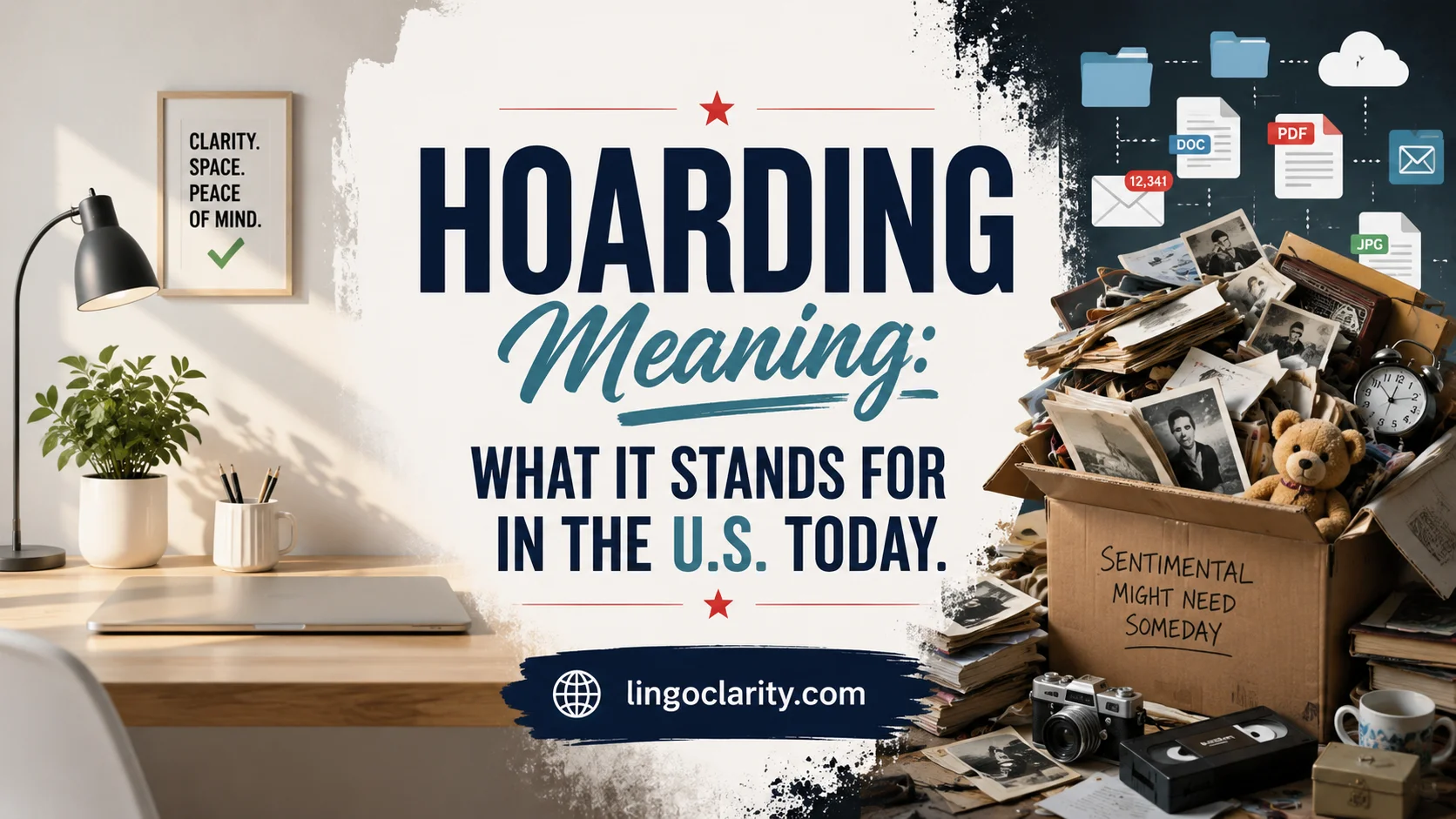
The hoarding meaning can change slightly depending on context, but it usually refers to keeping too much of something. People may use the word when talking about household items, emergency supplies, money, food, digital files, or information.
However, hoarding is not always a casual word. Sometimes it describes ordinary excess, such as buying too many supplies during a shortage. In other cases, it can refer to a serious pattern involving distress, clutter, and difficulty discarding possessions.
Quick Answer: Hoarding Meaning
The hoarding meaning is the act of collecting, saving, or storing too much of something, especially when the amount becomes excessive, unnecessary, difficult to manage, or harmful.
For example, if someone buys far more bottled water than necessary during a shortage, people may call that hoarding. Likewise, if someone keeps piles of old papers, broken objects, or unused items that block rooms, that may also be described as hoarding.
Hoarding Meaning In Plain English
In plain English, hoarding meaning comes down to one simple idea: keeping too much and finding it hard to let go.
Hoarding usually suggests more than normal saving. For instance, keeping a few spare batteries for emergencies is reasonable. However, filling an entire closet with batteries you will never use may be described as hoarding.
The word often carries a negative tone because it can suggest clutter, fear, waste, unfairness, or loss of control. Therefore, it should be used carefully, especially when talking about a person rather than a behavior.
A simple definition is:
Hoarding is the act of keeping an excessive amount of something, often when it is no longer useful, needed, organized, or easy to manage.
How To Pronounce Hoarding
Hoarding is pronounced HOR-ding.
It rhymes with boarding.
The first part sounds like hoard, which means a saved supply. It also sounds like horde, but the meaning is different. Because these words sound alike, people often confuse them in writing.
Hoard, Horde, And Hoarding
Although hoard and horde sound the same, they are not the same word.
Hoard means a stored supply of something, or the act of saving too much.
Horde means a large crowd, swarm, or group.
Hoarding means the act or habit of hoarding.
For example:
“She kept a hoard of old coins in a box.”
“A horde of fans waited outside the arena.”
“The city warned against hoarding fuel before the storm.”
In other words, a hoard is stored, while a horde is a crowd.
What Part Of Speech Is Hoarding?
Hoarding is most often a noun. However, it can also work as a gerund or present participle.
Noun: “Hoarding became a problem in the apartment.”
Gerund: “Hoarding old receipts filled three drawers.”
Present Participle: “He is hoarding snacks before the storm.”
Noun Modifier: “Hoarding behavior can affect daily life.”
The base verb is hoard. The person who hoards is sometimes called a hoarder. However, that word can sound harsh, so it is usually better to use more respectful language.
Instead of saying, “He is a hoarder,” you can say, “He struggles with hoarding” or “He has difficulty discarding possessions.”
Common Uses Of Hoarding
The hoarding meaning changes slightly depending on the situation. Still, the core idea remains the same: keeping too much.
Hoarding Household Items
Hoarding often describes keeping too many objects at home. These may include newspapers, clothes, boxes, tools, furniture, containers, bags, books, or broken items.
For example:
“The hoarding in the garage made it impossible to park the car.”
This sentence suggests more than ordinary mess. Instead, it points to a buildup of items that affects the use of the space.
Hoarding Supplies During A Shortage
Hoarding can also describe buying or storing more supplies than needed when other people may need them too.
For example:
“The store limited sales of baby formula to prevent hoarding.”
In this case, the word suggests unfair or excessive storage. As a result, hoarding may sound selfish or socially harmful when supplies are limited.
Hoarding Money Or Resources
People may also use hoarding to describe keeping money, resources, or goods instead of using or sharing them.
For example:
“The company was accused of hoarding inventory to raise prices.”
Here, hoarding has a business or economic meaning. Therefore, it suggests control over resources rather than household clutter.
Digital Hoarding
Digital hoarding means saving too many digital items, such as emails, photos, screenshots, bookmarks, downloads, messages, apps, or cloud files.
For example:
“Hoarding old emails made it hard to find important documents.”
Digital hoarding may sound casual. However, it can still create stress, waste storage, and make daily tasks harder.
Hoarding In Mental Health Contexts
In mental health contexts, hoarding can describe a serious pattern of difficulty discarding possessions. This may involve distress, clutter, safety risks, or spaces that can no longer be used as intended.
However, not every messy room is hoarding. Also, not every large collection is hoarding. For that reason, it is important not to label someone casually.
A respectful sentence is:
“She is getting help for hoarding behavior.”
A less respectful sentence is:
“She is a hoarder.”
Hoarding Vs. Collecting, Saving, Stockpiling, And Clutter
The hoarding meaning is close to several other words, but these terms are not interchangeable. The best word depends on purpose, amount, organization, and impact.
| Word | Meaning | Example | Key Difference |
|---|---|---|---|
| Hoarding | Keeping too much, often with clutter, distress, unfairness, or lack of control | “He was hoarding old newspapers.” | Suggests excess or difficulty letting go |
| Collecting | Gathering items with purpose, order, or enjoyment | “She collects rare stamps.” | Usually organized and intentional |
| Saving | Keeping something for a clear future use | “They are saving money for rent.” | Usually practical and planned |
| Stockpiling | Storing extra supplies for a possible need | “The town stockpiled sandbags before the flood.” | Can be reasonable preparation |
| Clutter | A messy buildup of things | “The desk was covered in clutter.” | Does not always mean hoarding |
| Preparedness | Keeping reasonable emergency supplies | “They kept water and batteries for storms.” | Limited, planned, and useful |
For example, a neat shelf of rare books is usually a collection. However, piles of damaged books blocking hallways may be described as hoarding.
Likewise, saving money for rent is responsible. In contrast, hoarding resources may suggest keeping more than needed while others go without.
Examples Of Hoarding In Sentences
Examples make the hoarding meaning easier to understand because they show tone and context.
“The city asked residents to avoid hoarding fuel.”
“Her family worried about the hoarding in the basement.”
“Hoarding old emails made it hard to find important messages.”
“The store limited sales to prevent hoarding.”
“He joked that he was hoarding coffee mugs.”
“During the shortage, some shoppers began hoarding toilet paper.”
“The landlord complained about hoarding in the storage room.”
“She collects rare books, but she is not hoarding them.”
These examples show that hoarding can sound serious, practical, or casual. Therefore, the surrounding words matter.
When To Use Hoarding
Use hoarding when the amount feels excessive, unnecessary, unmanaged, unfair, or difficult to discard.
You can use it for:
Objects
Food
Money
Fuel
Medicine
Clothes
Papers
Emails
Photos
Data
Information
Supplies
For example:
“Hoarding supplies can make shortages worse.”
“She struggles with hoarding old papers.”
“Digital hoarding can make important files harder to find.”
However, do not use hoarding when you simply mean normal saving, collecting, or preparing.
Better:
“She collects vintage postcards.”
Not:
“She hoards vintage postcards.”
Better:
“They saved money for emergencies.”
Not:
“They hoarded money for emergencies.”
Better:
“They stocked up on water before the storm.”
Not always:
“They hoarded water before the storm.”
Is Hoarding A Slang Word?
Hoarding is not usually slang. It is a standard English word used in dictionaries, news reports, health writing, business writing, and everyday conversation.
However, people may use it casually online.
For example:
“I’m hoarding screenshots for later.”
In that sentence, the speaker probably means they are saving many screenshots. Therefore, the tone is lighter than in a medical or safety context.
Is Hoarding Always Bad?
Hoarding is not always used in the same way. Sometimes hoard simply means a stored supply, especially in older, historical, or literary writing.
For example:
“The treasure hunters found a hoard of ancient coins.”
However, the modern word hoarding often sounds negative because it suggests excess, clutter, waste, unfairness, or distress.
As a result, it is best to check the context before deciding how serious the word is.
Is Hoarding The Same As Being Messy?
No, hoarding is not the same as being messy.
A messy room may happen because someone is busy, tired, stressed, or short on storage space. However, hoarding usually suggests a stronger pattern of keeping things and struggling to discard them.
For example, a desk covered with papers may be cluttered. In contrast, a room filled with saved items that blocks the bed, door, or floor may suggest hoarding behavior.
Therefore, “messy” is a broader and less serious word. Hoarding is more specific.
Synonyms For Hoarding
The best synonym depends on the context. However, these words are often related to the hoarding meaning:
Accumulating means gathering more over time.
Stockpiling means storing supplies for later use.
Amassing means collecting a large amount.
Storing means keeping something somewhere.
Saving means keeping something for future use.
Stashing means putting something away, often secretly or casually.
Piling up means increasing in a messy or uncontrolled way.
However, these synonyms do not all have the same tone. For example, saving can sound responsible, while hoarding usually suggests excess.
Antonyms For Hoarding
There is no perfect opposite in every context. However, useful antonyms include:
Discarding
Decluttering
Sharing
Donating
Using up
Distributing
Throwing away
For example, the opposite of hoarding supplies during a shortage may be sharing them fairly. Meanwhile, the opposite of hoarding household clutter may be decluttering or donating unused items.
Common Mistakes With Hoarding
Using Hoarding For Any Collection
Not every collection is hoarding.
Better:
“She collects antique lamps.”
Use hoarding only when the amount is excessive, disorganized, harmful, or hard to discard.
Confusing Hoard And Horde
A hoard is a stored supply.
A horde is a crowd.
Correct:
“A hoard of gold.”
“A horde of tourists.”
Spelling Hoarding As Hording
The correct spelling is hoarding.
Hording is usually a spelling mistake when the intended meaning is saving or keeping too much.
Calling Someone A Hoarder Too Quickly
The word hoarder can sound insulting. Therefore, use people-first wording when the topic is sensitive.
Better:
“She struggles with hoarding.”
“He has difficulty discarding possessions.”
“They are dealing with severe clutter and saved items.”
FAQ
What does hoarding mean?
Hoarding means collecting, saving, or storing too much of something. The word often suggests that the amount is excessive, unnecessary, cluttered, unfair, or difficult to manage.
What is the simple hoarding meaning?
The simple hoarding meaning is keeping too much and finding it hard to let go. For example, saving a few old letters is normal, but keeping boxes of old papers that block rooms may be called hoarding.
What is an example of hoarding?
An example of hoarding is buying far more supplies than needed during a shortage. Another example is keeping piles of old papers, broken items, or unused containers until they take over living spaces.
Is hoarding a mental illness?
Hoarding is not always a mental illness. In everyday speech, it can simply mean excessive saving or stockpiling. However, hoarding disorder is a mental health condition that involves persistent difficulty discarding possessions and distress about letting them go.
What is the difference between hoarding and collecting?
Collecting usually has order, purpose, and enjoyment. Hoarding usually involves excess, clutter, distress, or difficulty discarding items. For example, a carefully arranged stamp album is collecting, while piles of unsorted items blocking a room may be hoarding.
What is digital hoarding?
Digital hoarding means saving too many digital items, such as emails, photos, screenshots, bookmarks, downloads, files, or messages. Although it does not fill a physical room, it can still cause stress and make important information harder to find.
Is hoarding the same as stockpiling?
No, hoarding and stockpiling are not always the same. Stockpiling can be reasonable when someone stores useful supplies for a real need. However, it can become hoarding when the amount is excessive, wasteful, unfair, or difficult to manage.
Is hoarding the same as clutter?
No. Clutter means a messy buildup of things. However, hoarding suggests a stronger pattern of excessive keeping, especially when discarding items feels difficult or living spaces become hard to use.
What is the opposite of hoarding?
The opposite of hoarding depends on the context. Good choices include decluttering, discarding, donating, sharing, distributing, or using up.
Is hoarding a rude word?
Hoarding is not rude by itself. However, calling someone a “hoarder” can sound judgmental. Therefore, it is usually better to say “a person who struggles with hoarding” or “someone dealing with hoarding behavior.”
Conclusion
The hoarding meaning centers on keeping too much of something. It may describe household items, emergency supplies, money, food, files, emails, photos, or information. However, the tone changes with context.
Use hoarding when excess, clutter, unfair storage, or difficulty letting go matters. In contrast, use collecting, saving, stockpiling, or preparing when the behavior is organized, useful, and reasonable.
Most importantly, use the word carefully when talking about people. Hoarding can be a casual term, but it can also point to serious distress. Therefore, respectful wording makes the meaning clearer and kinder.
