
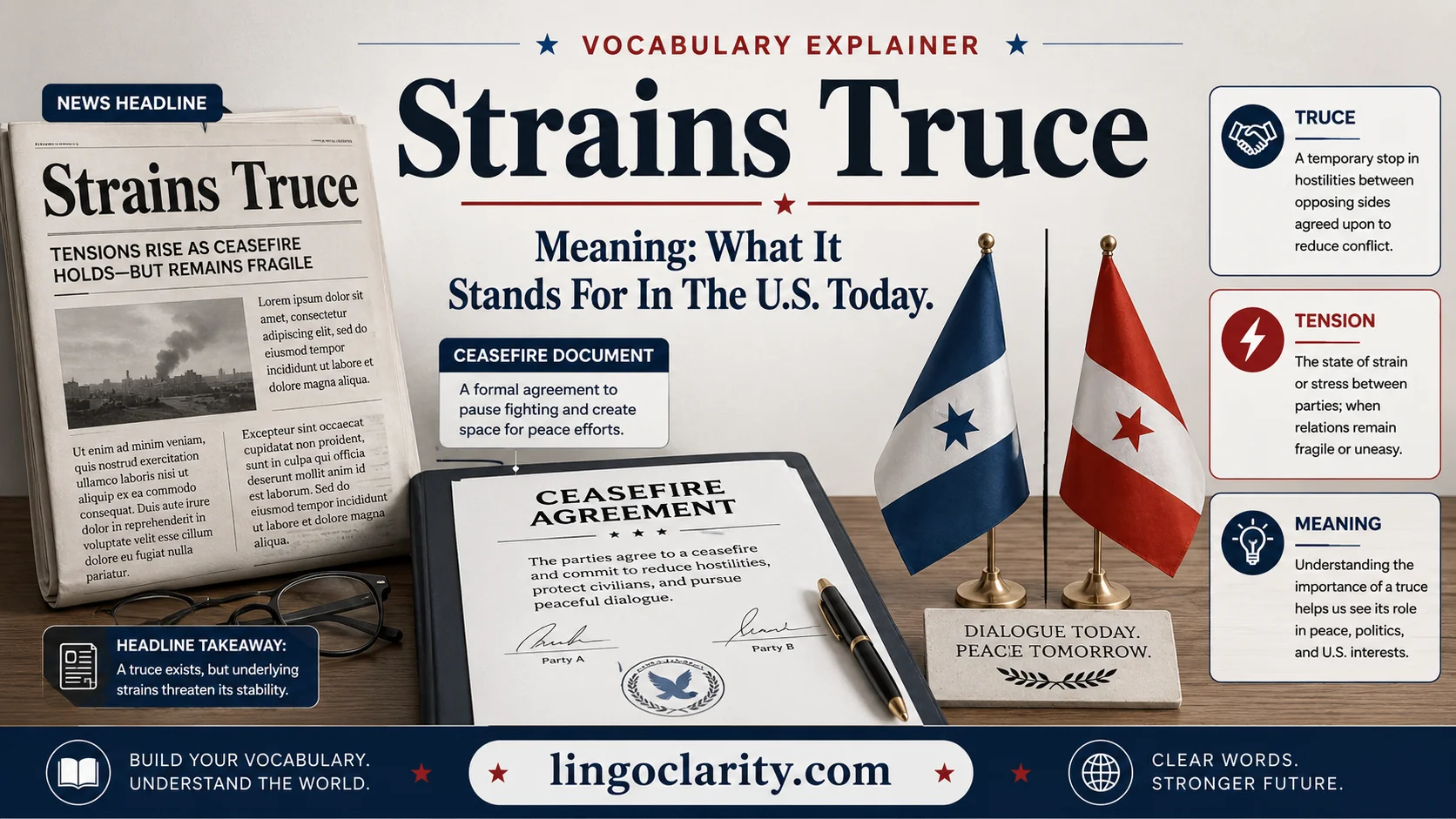
Strains truce meaning refers to a situation where an event, action, or disagreement puts pressure on a temporary peace agreement between two sides. It does not always mean the truce has ended. Instead, it shows that the truce is being tested, weakened, or made harder to maintain.
In news writing, you may see a headline like “Renewed fighting strains truce”, which means the new violence is threatening the stability of a temporary pause in conflict. The phrase is common in journalism and headline language because it is short and impactful.
Quick Answer
Strains truce meaning is when something puts pressure on a temporary peace agreement, making it weaker or harder to maintain. It does not necessarily mean the truce has broken. It simply shows that the agreement is under stress and may not hold if the situation worsens.
What Does Strains Truce Mean?
Strains truce means puts pressure on a truce or makes a truce harder to maintain.
A truce is a temporary agreement to stop fighting, arguing, or attacking. Strains means puts stress, pressure, or tension on something. Together, the phrase means that something is making a temporary peace agreement less stable.
The phrase is most common in news headlines about war, diplomacy, protests, political conflict, or tense negotiations.
A headline might say:
“Border Clash Strains Truce”
In plain English, that means:
“A border clash is putting pressure on the truce.”
The truce may still exist, but the situation has become more fragile.
Why The Phrase Sounds Incomplete
Strains truce sounds unusual because it is written in headline style.
In normal English, most writers would include the:
“The attack strains the truce.”
News headlines often remove small grammar words to save space and create a direct, dramatic style. That is why a headline may say:
“Fighting Strains Truce”
instead of:
“The fighting strains the truce.”
Both communicate the same basic meaning, but “strains truce” is much more headline-like. In everyday writing, “strains the truce” sounds more natural.
Definition In Plain English
Strains truce means:
An action, event, or disagreement puts pressure on a temporary agreement to stop fighting or arguing.
The phrase suggests risk. It means the truce is under stress and may become harder to keep. However, it does not automatically mean the truce has collapsed.
Use this simple version when explaining it to beginners:
“Something happened that made the temporary peace agreement shaky.”
Strains Truce Vs Strains The Truce
| Phrase | Best Use | Example |
|---|---|---|
| Strains Truce | News headline style | New Fighting Strains Truce |
| Strains The Truce | Normal sentence | The new fighting strains the truce. |
| Puts Pressure On The Truce | Plain English | The new fighting puts pressure on the truce. |
| Threatens The Truce | Stronger wording | The attack threatens the truce. |
| Breaks The Truce | The truce has been violated or ended | The surprise attack breaks the truce. |
The safest form in regular writing is “strains the truce.”
How To Use Strains Truce Correctly
Use strains truce when a truce is still in place but facing pressure.
Correct headline-style examples:
Renewed Fighting Strains Truce
Prisoner Dispute Strains Truce
Border Violence Strains Truce
New Accusations Strain Fragile Truce
Correct full-sentence examples:
Renewed fighting strains the truce between the two sides.
The prisoner dispute has strained the fragile truce.
New accusations are putting pressure on the truce.
The truce still holds, but the latest violence has strained it.
Avoid using strains truce in casual conversation unless you are copying a news headline style.
Does Strains Truce Mean The Truce Is Broken?
No. Strains truce does not always mean the truce is broken.
It usually means the truce is under pressure. The agreement may still be active, but trust is weaker, tensions are higher, or future violations seem more likely.
Compare these meanings:
Strains the truce = puts pressure on it.
Tests the truce = challenges it.
Threatens the truce = creates serious risk.
Violates the truce = breaks a rule of the agreement.
Breaks the truce = ends or clearly breaches the agreement.
This difference matters because news headlines often choose careful wording. Strains warns of danger without saying the agreement has fully failed.
Tone, Context, And Formality
Strains truce sounds formal, serious, and journalistic. It is common in headlines, political reporting, conflict updates, and diplomatic analysis.
You are unlikely to hear someone say it in everyday conversation. A person would probably say:
“That could ruin the deal.”
“That makes the agreement shaky.”
“That puts pressure on the peace talks.”
In news writing, however, strains truce works well because it is short and serious. It suggests that a fragile agreement is being tested.
Common Contexts For Strains Truce
Writers may use the phrase when discussing:
War And Armed Conflict
“Airstrikes strain the truce.”
This means the airstrikes are making the ceasefire or temporary pause less stable.
Diplomacy
“New demands strain the truce before peace talks.”
This means negotiations are becoming more difficult because the agreement is under pressure.
Political Conflict
“Rival accusations strain the truce between parties.”
This means the temporary cooperation between political groups is weakening.
Protests Or Civil Unrest
“Late-night clashes strain the truce with city officials.”
This means a temporary agreement between protesters and officials is becoming harder to maintain.
Personal Or Workplace Conflict
This use is less common, but possible:
“The leaked email strained the truce between the two departments.”
Here, truce is figurative. It means a temporary pause in conflict, not a military agreement.
Pronunciation
Strains is pronounced straynz.
Truce is pronounced troos.
Together:
straynz troos
In standard US English, truce rhymes with goose, loose, and juice.
Part Of Speech
In strains truce, strains is a verb and truce is a noun.
The phrase works as a shortened headline-style verb phrase.
In full grammar, write:
“strains the truce”
Example:
“The attack strains the truce between the two sides.”
Synonyms For Strains Truce
There is no perfect one-word synonym because this is a phrase. The best alternatives depend on how strong you want the sentence to sound.
| Alternative | Strength | Meaning |
|---|---|---|
| Tests The Truce | Mild | Challenges the agreement |
| Puts Pressure On The Truce | Clear | Makes the agreement harder to keep |
| Strains The Truce | Standard | Creates tension around the agreement |
| Weakens The Truce | Stronger | Makes the agreement less stable |
| Threatens The Truce | Strong | Puts the agreement at serious risk |
| Undermines The Truce | Strong | Damages support for the agreement |
| Breaks The Truce | Strongest | Ends or violates the agreement |
For most learners, puts pressure on the truce is the clearest replacement.
Antonyms And Opposite Phrases
Opposite phrases include:
Strengthens The Truce
Supports The Truce
Protects The Truce
Preserves The Truce
Helps Maintain The Truce
Keeps The Truce In Place
Example:
“The prisoner exchange helped preserve the truce.”
That means the action made the temporary peace more stable.
Strains Truce Vs Related Phrases
| Phrase | Meaning |
|---|---|
| Call A Truce | Agree to stop fighting or arguing for a time |
| Hold A Truce | Keep the agreement in place |
| Break A Truce | Violate or end the agreement |
| Strain A Truce | Put pressure on the agreement |
| Threaten A Truce | Create serious risk that it may fail |
| Fragile Truce | A weak or unstable temporary peace |
| Uneasy Truce | A tense truce with little trust |
| Truce Holds | The agreement is still working |
Common Mistakes
Do not assume strains truce means the truce has already ended. It usually means the truce is under pressure.
Do not use strains truce as a normal conversational phrase. It sounds like a headline.
Do not forget the in standard sentences. Write “strains the truce” unless you are writing a headline.
Do not confuse truce with permanent peace. A truce is usually temporary.
Do not use breaks the truce unless the agreement has actually been violated or ended.
Correct And Incorrect Examples
Incorrect: The fighting strains truce between the groups.
Correct: The fighting strains the truce between the groups.
Incorrect: The truce was strained, so it definitely ended.
Correct: The truce was strained, but it had not ended.
Incorrect: Their small disagreement strains truce.
Correct: Their disagreement put pressure on their temporary truce.
Incorrect: The attack supports the truce.
Correct: The attack strains the truce.
More Example Sentences
Renewed fighting strains the truce along the border.
The truce still holds, but recent attacks have put it under strain.
New accusations from both sides are straining the agreement.
The prisoner dispute strained the truce before talks resumed.
Late-night clashes threatened to strain the fragile truce.
The peace committee said the latest incident did not break the truce, but it did weaken trust.
A successful aid delivery helped preserve the truce.
The two sides called a truce after weeks of conflict.
The agreement remains in place, though several violations have strained it.
Dictionary-Style Details
Phrase: strains truce
Full standard form: strains the truce
Pronunciation: straynz troos
Meaning: puts pressure on a temporary agreement to stop fighting or arguing
Tone: formal, serious, journalistic
Best context: news, diplomacy, conflict reporting, political tension, negotiations
Plain-English replacement: puts pressure on the truce
Closest synonyms: tests the truce, weakens the truce, threatens the truce
Opposites: strengthens the truce, protects the truce, preserves the truce
FAQ
What does strains truce mean?
Strains truce means an event or action is putting pressure on a temporary agreement to stop fighting or arguing. It suggests the truce is becoming weaker, tenser, or harder to maintain.
Is strains truce correct grammar?
It is correct in headline style, where small words are often omitted. In normal writing, “strains the truce” is more natural and grammatically complete.
Does strains truce mean the truce ended?
No. It usually means the truce is under pressure, not necessarily ended. If the truce has ended, stronger wording such as “breaks the truce” or “violates the truce” is clearer.
What is a simple synonym for strains truce?
The clearest synonym is puts pressure on the truce. Other options include tests the truce, weakens the truce, and threatens the truce.
Can I use strains truce in everyday conversation?
You can, but it may sound too formal or news-like. In everyday speech, say “puts pressure on the agreement” or “makes the deal harder to keep.”
Conclusion
Strains truce means puts pressure on a temporary peace agreement. It is mainly a news-headline phrase used when fighting, accusations, political tension, or other events make a truce harder to maintain.
The phrase does not automatically mean the truce has ended. It means the agreement is being tested. For regular writing, use “strains the truce.” For the clearest plain-English version, write “puts pressure on the truce.”
