
Inroduction
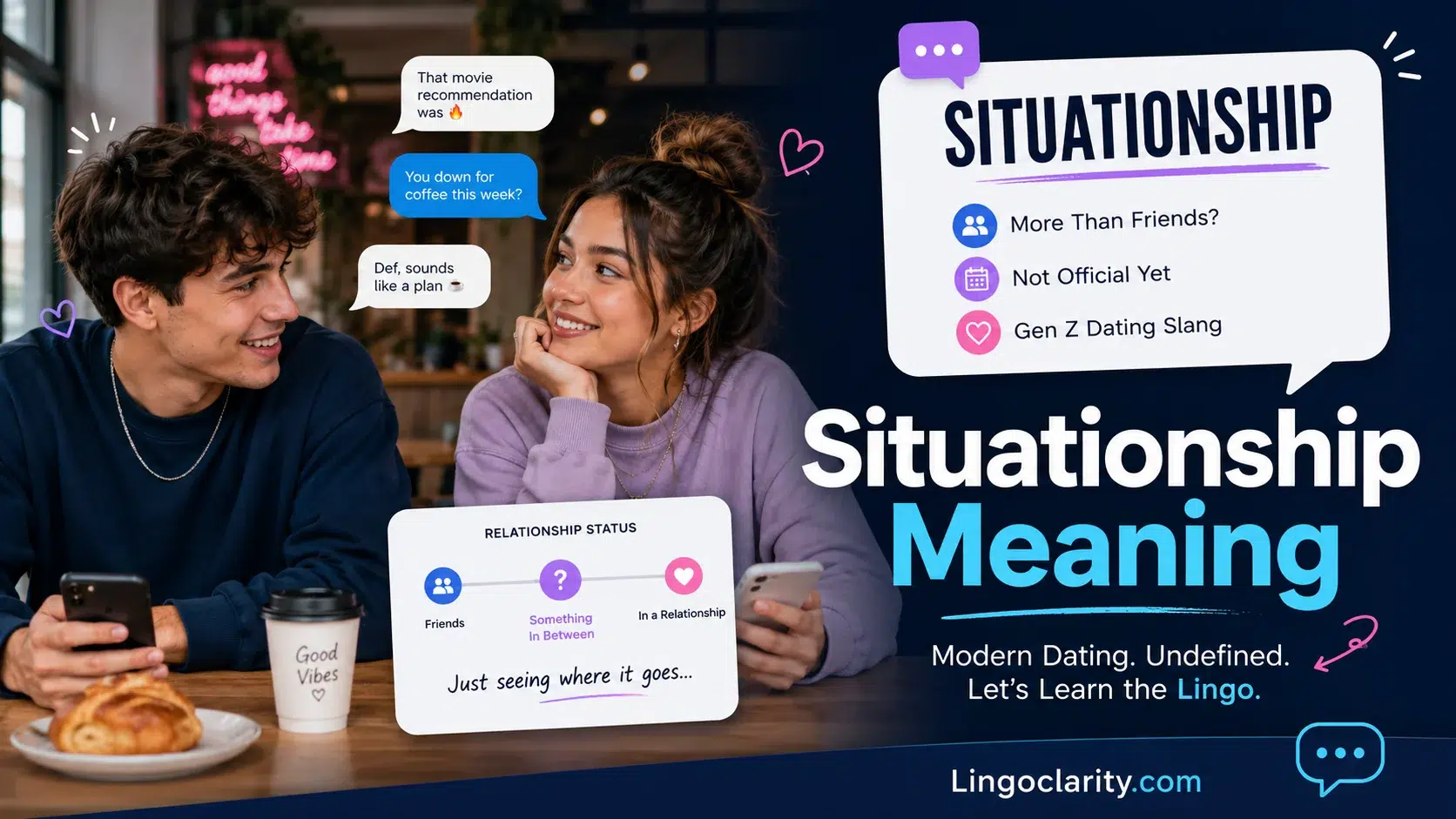
A situationship is a romantic connection that feels like a relationship but never gets a clear label or commitment. It usually involves emotional closeness, attraction, and regular communication — without the agreements that come with an official couple.
The term grew out of Gen Z dating culture and online conversations, describing a space between friendship and a defined partnership. A situationship isn’t automatically good or bad. For some, it’s breathing room to sort out real feelings. For others, the lack of clarity turns into quiet stress.
Knowing the situationship meaning helps you name what you’re actually in — and decide if it still works for you.
Quick Answer
A situationship is an undefined romantic connection: some emotional or physical closeness, but no agreement to be a committed couple. People often describe it as “more than friends, less than a relationship.”
The real difference between a situationship and a relationship isn’t intensity — it’s clarity. A relationship runs on shared expectations. A situationship often runs on guesswork.
Situationship:
- A situationship is a romantic connection without a defined label.
- It usually includes dating, texting, attraction, and closeness.
- Unclear expectations are the core issue, not the feelings themselves.
- Some people genuinely prefer the freedom it offers.
- Honest conversation is what decides whether it grows or ends.
- It can turn into a relationship — but it doesn’t have to.
What Does Situationship Mean, Exactly?
The word blends “situation” and “relationship” — a fitting mashup for a connection that has all the relationship behaviors but none of the relationship paperwork.
Two people in a situationship might talk daily, go on dates, share personal details, and act like a couple behind closed doors. What they usually skip: the boyfriend/girlfriend label, exclusivity talks, or any real conversation about the future. The connection is real. The boundaries are the blurry part.
Sign One: You Act Like a Couple, Minus the Label
You text constantly, plan hangouts, and support each other through bad days — yet neither of you has said what this actually is. The behavior says “together.” The vocabulary says nothing.
Sign Two: There’s Real Chemistry, Not Just Friendship
Situationships aren’t just close friendships with extra texting. There’s usually genuine romantic or physical attraction driving the connection, which is exactly what makes the lack of definition feel so confusing.
Sign Three: The Future Never Comes Up
Committed couples talk about where things are headed, even loosely. In a situationship, that topic tends to get sidestepped — sometimes on purpose, sometimes because neither person wants to be the one who “ruins it.”
Sign Four: Communication Runs Hot and Cold
Some situationships involve daily contact. Others swing between intense attention and sudden distance. That inconsistency is often what leaves people refreshing their phone, wondering what changed.
Sign Five: You’re Constantly Guessing Where You Stand
Do they actually like me? Are we exclusive? Is this going anywhere? If your inner monologue sounds like a group chat interrogation, that uncertainty is usually the clearest sign you’re in a situationship rather than a relationship.
Situationship vs. Relationship: Side by Side
| Situationship | Relationship |
|---|---|
| Usually no clear label | Has an agreed-on definition |
| Expectations often unspoken | Expectations are discussed |
| Commitment level varies | Commitment is consistent |
| Future rarely mentioned | Future is often planned together |
| Boundaries feel blurry | Boundaries are set early |
A situationship isn’t automatically “less than” — it’s simply less defined.
Why Situationships Are a Gen Z Dating Staple
Situationships trend heavily in Gen Z dating conversations because younger daters often approach commitment differently than previous generations did. Dating apps widen the pool, so there’s less urgency to lock things down. Many people want time to focus on career or personal goals before defining a relationship. Online communication itself has also reshaped how closeness gets built — texting, streaks, and social media replies can create intimacy long before a label ever enters the chat.
For some, that gray area feels like a comfortable middle ground: connection without immediate pressure. It only works, though, when both people actually want the same undefined thing.
The Upside of Staying Undefined
A situationship can offer real value. It gives you time to learn someone’s habits and character before committing on paper. It removes the pressure of instant future-planning. When both people agree on the terms, it can offer genuine independence. And sometimes, it’s simply the runway a relationship needed before taking off.
The Downside Worth Knowing
The flip side is real too. Unclear expectations are the number one complaint — one person wants commitment while the other is happy staying casual. Mixed signals can breed anxiety, especially as feelings deepen. Without spoken agreements, it’s easy to feel replaceable. And the conversation that would fix all this often gets avoided precisely because it feels risky.
How to Navigate — or Exit — a Situationship
Start with honesty. You don’t need to demand a label on day one, but a simple “where do you see this going?” can save months of overthinking. Watch actions, not just words — consistency, effort, and respect say more than any text ever will. And get clear on your own boundaries: what you need around communication, time, and commitment before you can even evaluate someone else’s.
If it’s time to walk away, a direct, kind sentence does the job: “I’ve enjoyed this, but I’m looking for something clearer.” Clarity, even in an ending, is still a gift.
Frequently Asked Questions
A romantic connection where two people act like they’re dating without ever defining the relationship — somewhere between friendship and commitment.
Not quite. Dating usually explores a possible relationship; a situationship is an ongoing connection that stays undefined on purpose or by avoidance.
Yes, when both people communicate openly and want the same future. It’s common, but never guaranteed.
Often for freedom from immediate commitment, or time to understand their own feelings before defining anything.
Not inherently. Trouble usually starts when expectations differ, communication is weak, or one person wants more than the other is offering.
When it causes more stress than happiness, your needs go unheard, or you and the other person clearly want different things
A situationship can be exciting, confusing, or genuinely meaningful — sometimes all three in one week. The real work isn’t finding the “right” label; it’s getting clear on what you want and saying it out loud.

1 thought on “Situationship Meaning: What Is a Situationship ?”
Comments are closed.